


by: COMMANDER ENTERPRISE
Online radio stations today not only cater to different audiences and genres of music. The different formats they’re also played on show the different ways listeners access the broadcast. Whether it is a personal computer or mac at home or the office, or a smartphone, phablet or tablet on-the-go, people will listen. Laptops and netbooks that are online can also access it anywhere.
In films like Pump up the Volume and even (remotely) Airheads, the pursuit and allure of playing music on-air, speaking to the public, and on the air talks and discussions, on that same public (to some extent) format has always fascinated media and music fans. Being a DJ and having the sole say on what to play and what to air is like a dream to some.

But as those films are outdated examples, we format them to something that is more common today, and sometimes a little easier to handle: online radio, or more specifically, independent, underground online radio.
Although the analog model of yore is a much exciting and more rogue-ish movement (ala Pump Up the Volume – the soundtrack is killer too) there will be less issues with an online based independent radio station. There are just a few certain steps to do, such as procuring audio equipment, choosing content, and acquiring a streaming server to facilitate broadcasting. It will also be much easier to realise and run, in the long run.
Setting up an online DIY Radio Station
To be able to choose music and content to air, and to generally broadcast media online as a DJ is a dream and a passion for many people. The freedom to be heard, play music, interview people, offer reviews, announcements, and other perks associated with the radio industry is very rewarding.
It’s a liberating feeling to have an outlet like this, to simply promote and play good music, and also have an exchange of ideas with people. Setting up an instant online radio station calls for just a few key equipment, most of them available in electronics and audio stores, and some probably existing in one’s computer room, or man-cave fortress.
As most basic set-ups go, a few key basic pieces of equipment will be needed: a storage laptop or computer to source all digital audio files from, a reliable media player that has provisions for plug ins that may be needed, a microphone (if one intends to host and do some talking whether live or prerecorded), a mixer (optional) for optimal audio quality, and a dedicated audio streaming server that will handle the material and content from one’s set-up and distribute it to all who are going to tune in (the audience).
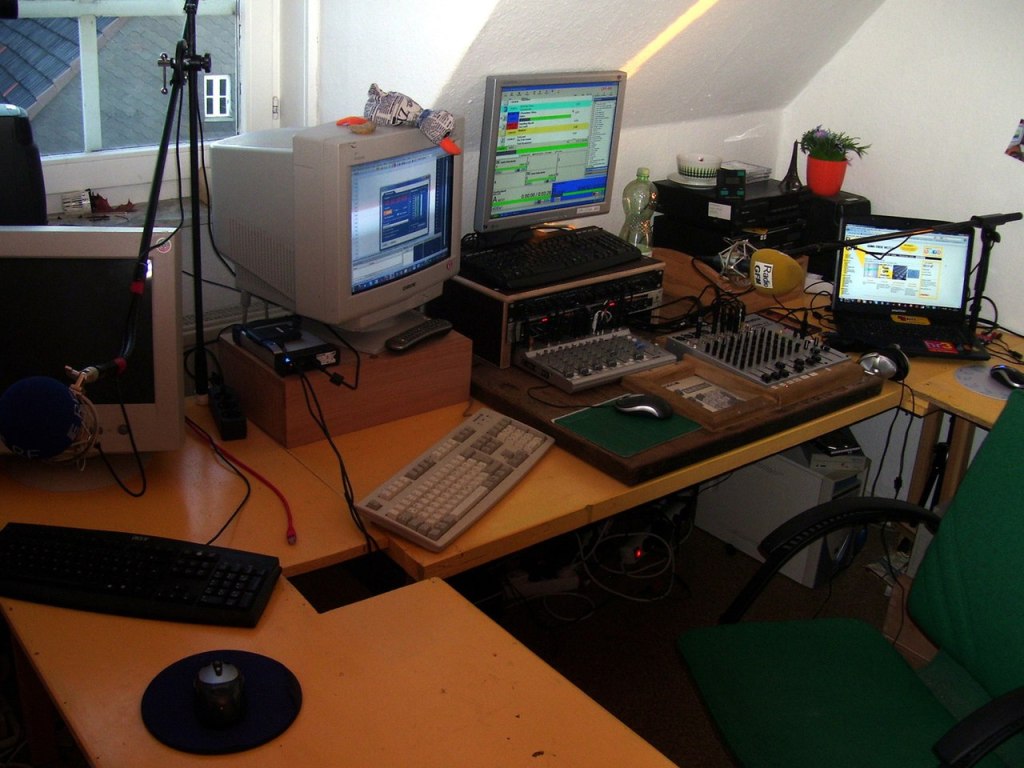
There are also a few adjustments and tweaks that will be needed to optimise the player and have it run smoothly with an app, direct to the chosen streaming server that will host the radio show.
Most of this is sorted out with either a free or a paid streaming audio server service. The IP address configurations will be provided in order to set-up the source content and app to the server specifications for it to be good to go for broadcast. Other music sources, such as CD players, decks, turntables, and portable media players can also be used for other formats, played live or pre-recorded, usually plugged in to a mixer.
At this point, this is where a fast, reliable broadband connection comes in, such as NBN, high level ADSL, or even Wi-Fi. Anticipating the bandwidth and the number of potential users other than friends and family who will be listening in will be considered. A powerful connection with a high download and upload rate is most definitely needed, and must be initially tested to accommodate the program.
Since we are using a digital format for the indie radio station, it is best to have all material in high quality digital files on a storage laptop or computer which will become the main audio source / playlist. This means having digital copies of the content, preferably the more non-copyrighted ones such as demos, independent releases, or material with enough permission from the owners, labels or artists. Most stations specially the free servers have a minimum 128kbps although at best, a 192kbps rate can up the audio quality much better.
DIY Broadcasting
There are two streaming service broadcast methods to choose from: the paid and the free service. The paid model calls for signing up with a number of “radio station” service providers that take care of the basics, and offer dependable bandwidth. It uses streaming media apps to play the radio shows and content online.
This type of set-up eliminates some of the issues associated with the reliability of the server, the technicalities, and setting up. The other model is free and uses the same basic components, but is more or less limited with some of their operational options. It may also use ads and other advertising elements not present with a dedicated and paid regular streaming service.
With this sorted out, playing material is basically equals to sky’s the limit. Any material becomes a valuable source of broadcasting media: podcasts, interviews, discussions, demos, live performances, spoken word, independent recordings, premieres, and a whole lot of other audio.
While most independent broadcasters play audio only, some that have additional web hosting services can host and play video streams, especially when they have guests for an interview or discussion, or there are live performances. While most multimedia streams can be live, a lot of them can also be pre-recorded material.
The show can be live, or pre-recorded, similar to the podcast format. The radio show can then be broadcast and re-broadcast anytime as a streaming audio file, or even as an archived, downloadable file. Some may prefer this in order to listen in their own convenient time. There are streaming server service providers who also have a package deal for webhosting, being able to set-up sites that have downloadable archives for past shows, aside from the full website.
Unless the radio station is an official station with all necessary papers and permissions, the station will be limited to mostly independent and non-copyrighted content. In this case, forget about the copyrighted material and accept submissions or material that has the go signal direct from their copyright holders.

Legal Implications
Now, before broadcasting, first things first: playing copyrighted material is a big issue and a possible future headache if one wants to get a major one or maybe several. It is this very idea that stops most underground radio operators and gets companies and copyright owners taking direct legal action.
Another issue: local rules and regulations regarding unregulated / illegal / pirate radio stations. There are many sanctions in place that will apply to any form of this activity. These are ultimately the limiting factors to take care of. This is where the terms “Pirate Radio” or even “Guerrilla Radio” come from (enter that Tom Morello riff as the Rage Against The Machine hit comes to mind).
However, just as with many things regarding this field, there are a few things that can be done in order to alleviate these limiting terms. As mentioned before, playing all exclusive content and material from independent artists and listener-submitted material is one good option. For all other types, we can go and request for permissions in advance, and keep this type of material in the minimum to lessen permission procuring issues.


 Towards Harmonious Civilization Zine
Leave a comment