


By: IVY MG
Music and Photos are not only a good, but a great combination. Just look at all the CD, vinyl, tape, and even digital artwork everywhere. It is associated with an image and enhanced by it. Band or musician photos identify the people behind the tunes, and are elements of the record’s artwork and images. Live and stills capture the live setting, and documents how the music is really played, and optimally.
Taking photos in the world of music is a different style of photography. There are certain nuances and details in it that are simple, but are not common and are unique to it. This makes it a certain artform of some sort.
Attempting to list down all of these tips can be endless, so we have five basic guides that can help once we take up some good shots and snappy pics.
Take advantage of the online world
There are many great things about modern day photography due to countless online sources: We have forums, online stores, official sites, downloadable manuals, galleries, and other pages to get interaction, information, and tips. It is also one of the fastest and most convenient ways to show one’s work and even get jobs. It can be a most versatile and useful tool to learn the art.
Many photographers learned it the old school way, but some got there with help from the online community. There’s no right or wrong way as long as the photographer knows his basics and develops an individual style. Unless one goes to a photography school, course, or subject, many online sources can also help teach the basics. But application, trial and error, and persistence are also well needed.

(Black Flag live in the UK, 1984. Stolen from Cvltnation.com)
Earn experience in the live setting
Every good photographer worth a dime will tell you, live shows and gigs are a great way to get experience in music photography. For one, it demands a fast and observant eye. These will result in those one in a million moments that produce incredible imagery. For sure, photo shoots elsewhere can be well composed with all the perfect elements, but something that can only happen once and then captured is much more priceless.
Second, it puts the photographer in a more complex situation with many uncontrollable and unpredictable elements. The training one will get from these situations will help build skills in quick decision making and learning to trust instincts. It will also train the budding photographer to make so many disparate elements work together and come up with unique shots and angles while in action. It will also develop improvisation skills.
Last, it will also make for a great portfolio, aside from earning valuable experience and shooting confidence. In return, other abilities will come to the fore to help with skills in being not just a good, but a great photographer. This includes impeccable timing, image composition, and being in the right place at the right time (and even in the wrong place at the wrong time as well).
Take advantage of today’s technology
Smart cameras with optimised features are now commonly used for a wide range of photography and portraiture purposes. And advanced smartphone cameras have also proliferated over the past 5 years, laden with many premium photography features in otherwise compact, handheld mobile devices.
Although many professional photographers would rather use DSLR’s and big format cameras, these two other devices can compete head to head when it comes to quality and convenience. Emphasis on the word convenience, which is facilitated by auto features and the digital format.
These devices and apps not only apply to human subjects, but also to album covers, photography based artwork, inner sleeve photos, digital or website photos and imagery, and also other important music related elements where well thought and well composed images can be used to great effect.
Capture the band /artist in their own element

(Glen E. Friedman by Brett Ratner, from wikipedia)
Glen E. Friedman, L.A. punk, hardcore, hiphop, and skateboard scene photographer extraordinaire is famous for capturing incredible images of artists and musicians in their own element. This means getting into the thick of the action, whenever and wherever it is where these subjects thrive and also excel at: onstage, on the street, in alleys, in large crowds, in their own hoods and territories. Where they belong, where they are from, where they will stand strong and stand out.
This sense of familiarity completes the overall theme of the photo because it is the most directly related to these subjects. For example, photos of Minor Threat playing in a small DIY all ages basement show covered in sweat, surrounded by punks and hardcore kids going crazy in the pit, or just hanging out in their front porch, in black and white are their best photos ever.
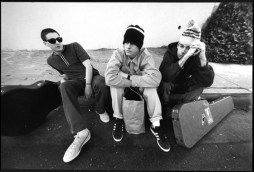
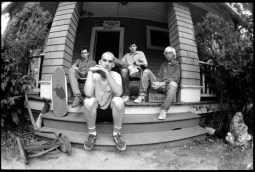
(Beastie Boys & Minor Threat, by Glen E. Friedman)
You can say the same thing for other bands he’s photographed like Black Flag, Minor Threat, Circle Jerks, Misfits, Dead Kennedys, Fugazi, Beastie Boys, etc. However, the outside elements except the band members are changed into their respective familiar surroundings, places, situations, conditions and other elements.
If one takes a photo of Lady Gaga in a weird artsy studio complete with her idiosyncratic outfits and makeup, it would make sense and not seem out of place. This is because it fully represents what that subject is all about, with all elements perfectly complementing and agreeing with the overall theme.
It is also a big advantage if one has followed a band, artist, or personality from their humble beginnings to their glory days. Being there from the early days will definitely show other sides of these subjects that are not easily seen when they hit it big. It also makes them more familiar, and with that, comes ease and confidence in getting good shots almost all of the time.
See the subject in a different light or style
On the flipside, capturing photo subjects out of their element is also a good technique; this presents them in a different way, and even presents maybe other sides of them that people have not seen before. This is applicable for image change, for creating variations of looks or publicity photos, or to create images out of their comfort zone.
This includes exploring other elements of the photo, such as lighting, location, styling, colour combinations, clothing, accessories (or lack thereof) and even other people aside from the band or artist. It could also be different perspectives from an unexpected position where the band looks different.

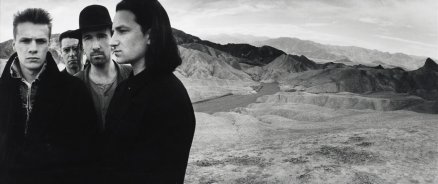
(Corbijn, 2012, stolen from wiki, and his U2 photo set in Death Valley)
Anton Corbijn is widely known for capturing grainy and intimate photos of many musicians and artists over the years. He also did a lot of imagery and video work for Depeche Mode and U2, among others.

He represents a no BS approach with no extra fancy lighting and glam or gloss. His photos have given these personalities a different side from the usual “pop” photography treatment. By doing one’s own style like Corbijn, it gives one their own signature photography style as well. This is where it develops and where the photographer discovers his or her own techniques or signature styles.
Some of the most iconic photos are not the usual ones taken in a studio. Some can be those taken out of the box or in unusual situations. Deviating and exploring themes once in a while is also good for a more varied and expanded portfolio.



 Towards Harmonious Civilization Zine
Leave a comment