


BY: COMMANDER ENTERPRISE
art by: Rx Zenabi
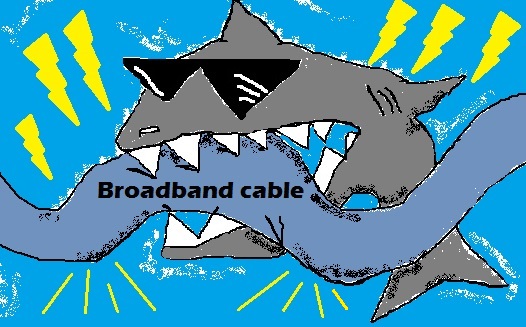
Sharks and slow internet may finally have a “connection”. Sharks have been blamed for many things, and slow broadband internet is actually one of them. Cue in the JAWS theme, or Accept’s “Fast as a Shark” if you must, but this ain’t a sharkbytes per second joke.
Before we hail restaurants to stock up on shark’s fin soup and dimsum, we have to realise that the “connection” isn’t what we think it is. It isn’t an anarchist move to stick it to the man, nor an angry response to your Instagram post, or anything that points to these predators being anti-technology.
Apparently it is not only blood that attracts them. Sharks are one of the few seawater creatures that detect electromagnetic fields, which attract them to these undersea broadband cables. They have electroreceptor organs called Ampullae of Lorenzini, which help them detect electric fields in sea water. And apparently, sharks have the highest sensitivity from all other fishes.
Asian regions and other distant locations that are connected by underwater cables have reported shark bites, causing serious damage to crucial cables owned by ISP’s and telecommunications companies. In a 1987 news report, an undersea phone cable near the Canary Islands, USA was reported for cable damage which bore damaging shark bites. This was the first documentation of a broadband shark attack.
Some cases from the Pacific Ocean areas have been documented regarding cable damage brought upon by attracted sharks finding these cables. Vietnam is one of the more prominent countries to have reports of slow broadband because sharks tried to attack their undersea cables. The electromagnetic fields these cables generate are akin to detecting agitated fishes, which seems like a good opportunity for sharks to zero in and take a literal bite out of the cables, whether they’re hungry or not. We don’t have videos of sharks eating into undersea power cables yet, we could imagine the kind of shock therapy they probably get out of it.
More Maritime Protection
While not all types of damage could be from these finned and armed to teeth fishes, there has been considerable activity from them, judging from the teeth marks and deep bite cuts found on these cables. This is unless Godzilla Jr. or a nearby smaller Kaiju did it, or Cthulhu developed advanced incisors that he might use to tap on your browsing history before he takes over the world.
Companies such as Google have invested in Kevlar protection, something a little more appropriate for state witnesses and those who just might catch gunfire at any minute. Others have also started using more metal and sheathing protection because of the “shark bite thingy”.
Others used a simpler and less hardcore method: burying the cables deep in the sand. This has worked for other issues other than sharks, namely fishing equipment, anchors, and other man made activity.
That said, this also confirms that damage comes from something less (or more) terrifying: humans, and their other well documented destructive habits. The ratio favoring towards more man made damage might even be higher.
Others still opt to use something more intensive; with underwater maintenance systems to both directly protect the cable, and also the surrounding areas from shark attacks. It is more of a necessary investment and preemptive maintenance; given the crucial broadband and telecommunications operations these cables have to deliver.



 Towards Harmonious Civilization Zine
Leave a comment