


(original article from THC Zine v.02 2018, by: Rallye Ryan Ibanez)
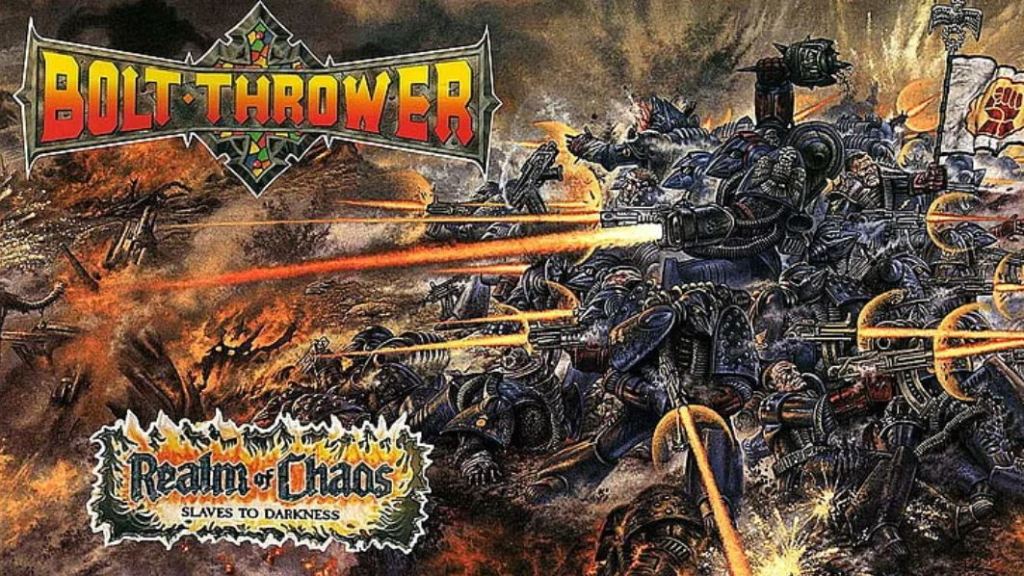
1989 saw British death metal merchants Bolt Thrower release the phenomenal classick, Realm of Chaos: Slaves to Darkness, released on seminal UK label Earache Records. More than just the killer tunes, the album is also well known for its incredible cover art that perfectly represented the deadly and chaotic new songs in the form of the Warhammer 40,000 artwork from Games Workshop, Britain’s popular miniature war games manufacturer. It was a match made in hell as both art and music were a perfect complement to each other.
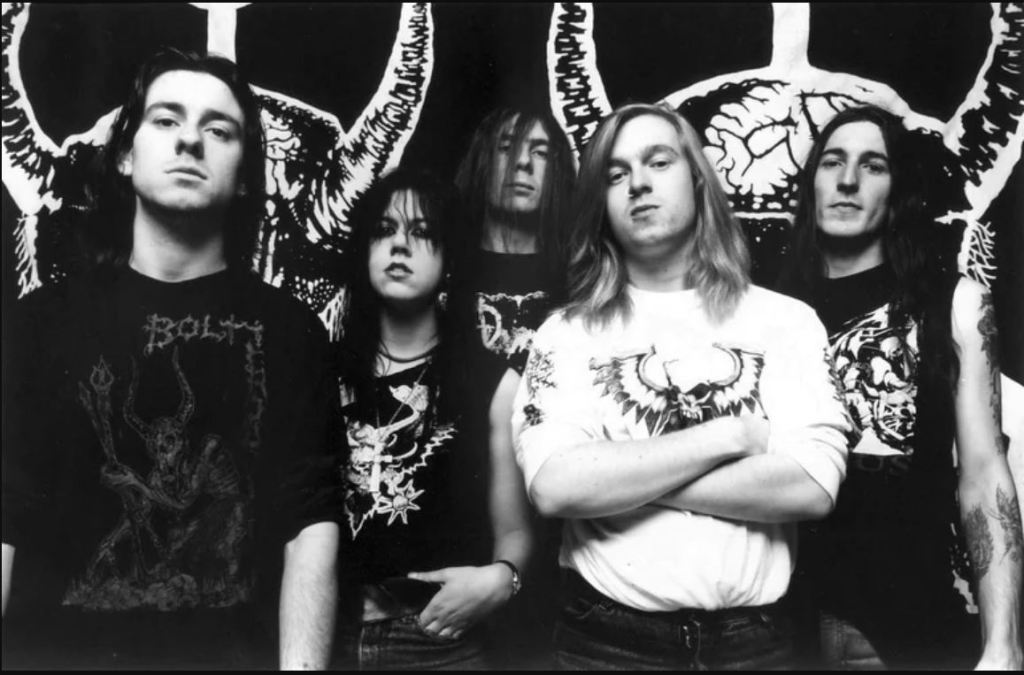
According to guitarist Barry Thomson and original drummer Andy Whale, Games Workshop approached the band in the late 80s with a proposition to collaborate on an album and other multimedia projects. This was even before they signed on with their first record label, Vinyl Solution.
Aside from the album, some of the original plans was to create video animation with Bolt Thrower’s brutal war metal tunes accompanying it. The company already designed their logo by Mark Craven and the contact persons they worked with were Bolt Thrower fans.
During this time, the band were already dissatisfied with their original record label, and were considering the offer from the war games company, and another offer from Britain’s notorious extreme music label, Earache Records.

The band decided to go all out and worked out a deal that involved a collaboration of the two interested parties. Games Workshop will work exclusively on the artwork, art direction, layout, and imagery. Earache will press the album, and secure the worldwide distribution. It made for a perfect decision, creating an influential landmark album in the death metal genre that closed the tail end of the 80s on a HIGH and brutal note.

With the official MOSH13 stamp and oldschool Earache splatter logo seal of approval, and adorned with the nightmarish Warhammer painting by acclaimed artist John Sibbick, Realm of Chaos was released to international acclaim and became an instant classic. Buying a gatefold edition vinyl LP of this record was similar to buying a warhammer game, replete with elaborate graphics and storytelling, a complete package that complements both elements.
The chaos eye symbol, along with intergalactic visions of war and destruction, and killer paintings and illustrations of space marines, black templars, blood and dark angels, grey knights, The Deathwatch, space wolves, and other chaos lords and space mercenaries, became synonymous with the band. This was one of the many times when the breathtaking artwork of chaos and eternal war became as essential as the music released.
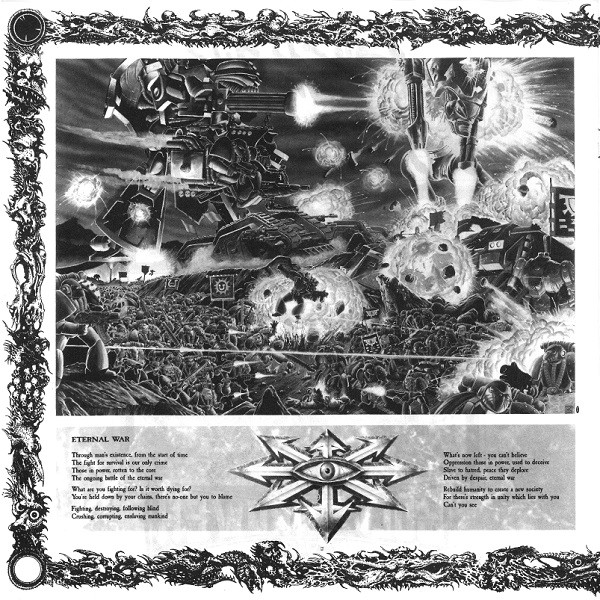
And yeah, before you forget, as you hold your $100++ OG gatefold copy and its booklet and artwork sheets, this is a death metal album too, and a classic slab of old school death metal at that with a heavy, drowning production and savage riffs, a pissed off rhythm section, and distinct death war growls from the killing fields that put the band prominently on the legendary death metal map. The band were big fans and players of the games, with vocalist Karl Willets, drummer Andy Whale, and guitarist Gavin Ward being the main enthusiasts of the most popular mini war game in the globe.
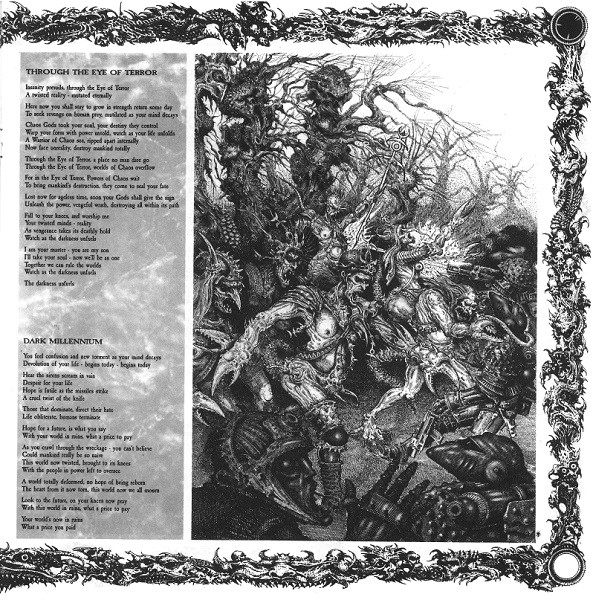
Realm of Chaos: Slaves to Darkness was the perfect war metal/death metal concept album, with a perfect tie-in to the incredible realm of Warhammer 40000. Classicks with direct references to the game told of bloodthirsty anticosmic space wars such as “Eternal War”, “All That Remains”, “Plague Bearer”, and “World Eater” barraged the senses along with the perfect visual accompaniment of the album.
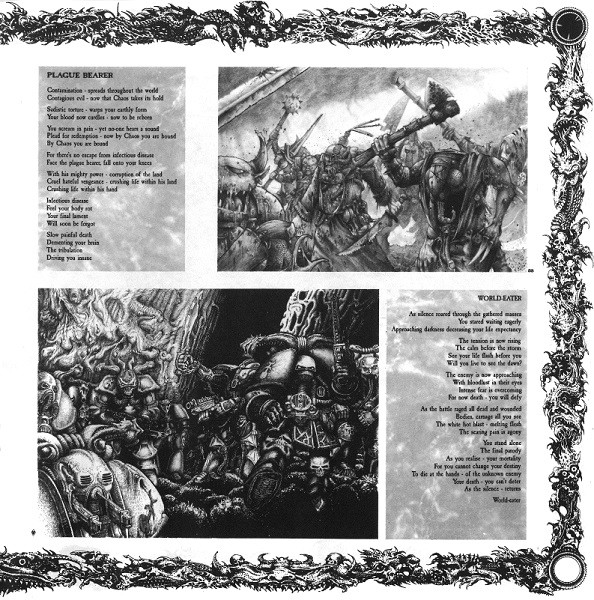
Top bloke Colin Richardson was the mix engineer, and as always, created the perfect balance of frequencies to destroy the world and the netherworlds where death, chaos, and destruction (not necessarily in that order) reigned supreme. Although later albums were even killer and had fuller production also by Richardson, Realm of Chaos held a certain old school appeal and a dark, murderous atmosphere that no one in that era could match.
Games Workshop licensed the artwork with a 13-year period, and within that time frame, the band and the label were able to reissue the album with the same iconic artwork and illustrations, from the picture disc, to cassettes, different versions of the CDs, shirts, and other merchandise.
However, shortly after the release of the album, the owner of the company sold Games Workshop, and it grew into a huge game company. The original contact persons who worked out the deal were no longer connected. By the time a 2002 plan for reissues from Earache came about, and an artwork license renewal was placed on the dealing table, the company was no longer the same. The only way the label and band can reuse this art license was through an exorbitant amount of money. This became a serious dilemma as the future reissues cannot use the OG artwork, after the company issued legal action against Earache.
Earache had two options: cancel the reissues, or use entirely different artwork. They tracked down OG artist John Sibbick, now a dinosaur art painter, and commissioned a completely new vision for the later reissues. While it stayed within the theme and looked great, it wasn’t the original artwork that was supposed to go with the record.

Understandably, the band insisted on the OG art, but this was impossible at this point. This was also the beginning of the band’s rift with Earache, along with their past disagreements, amidst allegations of non-payment of royalties. The 2005 reissue happened but with the new artwork along with confusion and disappointment from fans who expected the complete artwork and packaging.
Yes, the music in a record is the most important element. But in many cases, it is incomplete when the right artwork is missing and the replacement does not even top the OG, no matter how good it is.
Proof that in the world of physical media, artwork is just as important. It’s an essential, crucial, and critical element that completes the experience. Something that demands full attention and gives a multimedia experience to an exceptional record.
In the case of Bolt Thrower and Realm of Chaos, the two were inseparable, and abrupt changes like this weakened the overall package, no matter how killer and classic this album was. Before this retrospective article turns into a heavy discussion on physical media and artwork/packaging, grab your copy on vinyl, CD, or cassette, and blast it on full.



 Towards Harmonious Civilization Zine
Leave a comment