


by: [[[ G3 ]]]
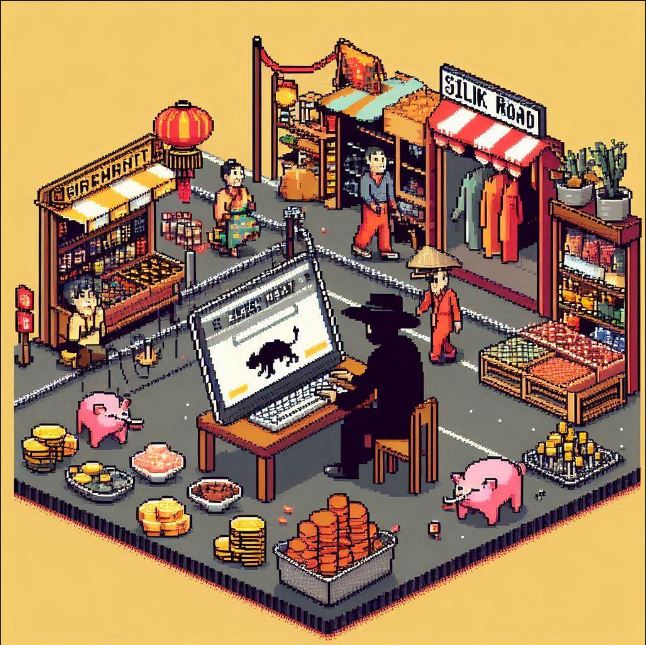
The correlation between Bitcoin, the now infamous online money system, and Silk Road, the Dark Web’s brightest star, didn’t seem to exist until the very last hours of the latter. It was a match made in heaven: a direct and foolproof virtual money system and an impenetrable, secret black market amongst hidden members of society, worldwide.

The site was originally established as an underground haven for selling drugs with complete anonymity and out of reach from the authorities. It may have been named after the ancient Eurasian trade route of the same name that was active from 2 BCE until the 15th century.
But ultimately, vulnerabilities were exposed, one by one. This is when the uninformed and unknowing part of the online public finally learned about its role in the online underground black market.
Bitcoin was the major currency for selling in that portal, hidden in worlds within worlds in the realm of the Dark Web. With agents tracking those behind the site due to exposure in the public spotlight, it proved to be a long torturous journey to find what theoretically can’t be found. Specialists and all sorts of Dark Web “experts” had a hard time cracking the site. No one can really trace where the hell Silk Road was, and to where it leads.
Silk Road may have flourished greatly during its short but grandiose heyday, but it was on its way to its last days when the underground trading site was finally cracked open by the FBI and CIA after a long and arduous investigation, with espionage and detailed spying that seemed to be straight out of some blockbuster film. Bitcoin played a major role in direct payments and transactions there and technically facilitated illegal activities through its ingenious system. Without it, Silk Road would just be another elaborate, utopian idea.
Bitcoin’s Inner Workings
Bitcoin’s ingenious system has several properties that make it stand out from other online payment systems: It is directly P2P or Peer to Peer, involving no middlemen, and instead is a universal monetary system online that is maintained and sustained by its collective users. It is also an open-source system, which allows the same collective of users to be involved in changes and development. It also has either lesser service fees or none involved in the transactions, making the payment as exact as possible. It also has no requirements needed in order to start using it, compared to other payment systems. Today it is also used for “real life” or outside the virtual world transactions, such as payments for cafés, shops, and restaurants.
The system of payments are recorded over a public “ledger” that is authenticated by digital signatures from one user to another, confirmed by the source computer making and receiving these payments. “Miners” are in charge of processing these transactions on the system (mining) and are paid in bitcoins as well for their hard work. Although it isn’t entirely anonymous, payments are directly made between the two participants in the transaction, and due to this, has some level of privacy, as no user and user payment details are disclosed. However, it is only limited to that, as the transaction is, as mentioned, recorded in a publicly accessible ledger that records all transactions that have taken place in the system. Still, it is not enough to get any usable information against Silk Road’s operations.

And Now, Ladies and Gentlemen, (Let’s Get Back to) Silk Road
Bitcoin become a standard for direct transactions between buyers and sellers online. It also became the standard payment system for the then completely clandestine site. It was only accessible via an app portal called TOR (The Onion Router), and even then it was also well hidden within the app itself. TOR played a major role in hosting the inaccessible realm of Silk Road.
The site was only visible through this app, and can only be seen, accessed, and interacted with by those who are part of the site and are within the hidden realm of the Dark Web via this app. Think of it as some sort of psychedelic app that allows the user to tap into its hidden realm, only this time it is not some version of subjective reality, but a portal to a realm that exists, but is totally hidden from the normal Web. All outgoing contraband was actually delivered via the good old United States postal service. No one could trace or even know what was going on because of the level of secrecy in and around Silk Road.
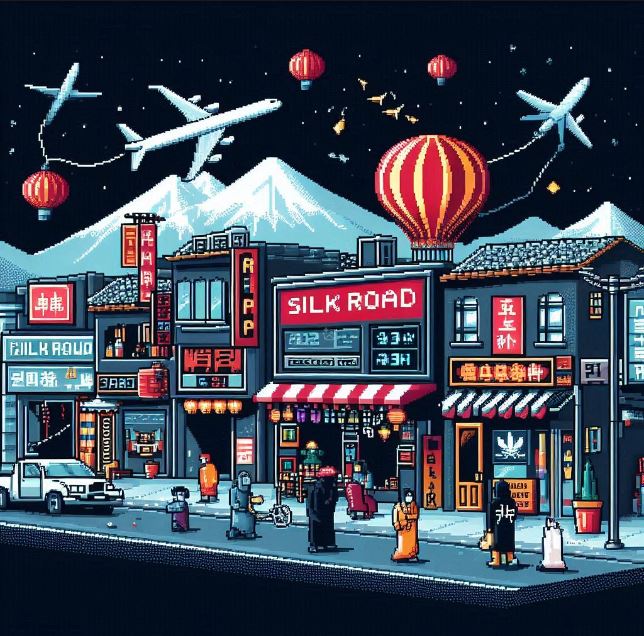
Just like the movie Inception, it involves going further within layers of another virtual world, but this time the users are not in a dream. And the people are in there to specifically buy and sell, not to implant ideas. But for those involved in the high stakes and even higher paying world of the illegal drug trade, Silk Road was their dream come true in their quest to make a living off their unmonitored trade and in their vision to defiantly and openly challenge the system.
Silk Road’s impenetrable system provided tons of wasted hours and migraines the size of the USA for concerned authorities. But still, the human element in it, when carefully studied, showed indirect strategies on how to approach their system to expose back door vulnerabilities and other ways to access parts of it, mostly from the outside. Certain vulnerabilities were slowly exposed over time, and the authorities decided to effectively prosecute key people.
As of today, the real Silk Road is no longer existent. And while there were attempts to restore a similar site through TOR, none of them lasted long enough to achieve its level. None of the very few even got close to half of it.
Mastermind Ross William Ulbricht, his associates, and a few unlucky sellers from different parts of the world are now behind bars. A couple of operatives were also arrested for the Bitcoin money they got off Ulbricht. Unsurprisingly, a film was made about the whole epic story, implanting it in the public’s consciousness and in pop culture. In its final whimper, it left a substantial kind of memory for people to remember it by, and also learn from. They are hard lessons to impart in a sometimes freedom-abusing world that also has access to TOR or Bitcoin.
And the millions of bitcoins generated by Silk Road during those high times? They have been stolen, without a trace, or even tracks to follow, just like how the website was untraceable back then.



 Towards Harmonious Civilization Zine
Leave a comment