


[originally appeared in THC Zine version 01 from our previous website]
By: Unkle F777
Guns N’ Roses toured behind their Use Your Illusion albums from January 20, 1991, to July 17, 1993. Just imagine the hectic, chaotic, and excessive rock n’ roll of that super extensive tour. They traveled the globe for more than 2 years. It caused major burnout, along with increasing personal differences.
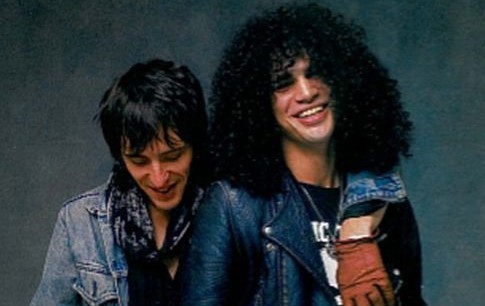
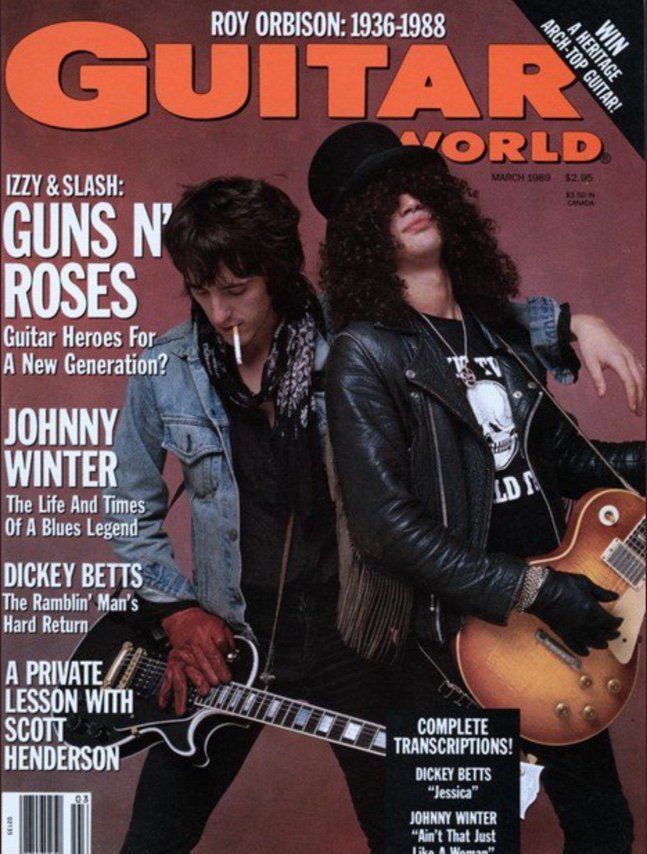
After the ensuing chaos of Guns and Roses’ Use Your Illusion 1 and 2 albums, with the promotion, press, and the subsequent tours, their two OG main guitarists had to step back and do their own thing for a while.
Left to do their own tunes to work on, the result was some great hard rock and rock n’ roll that was much different from their 90s Guns material. These albums also allowed them to explore and have their own say on songwriting, riff arrangement, and using their musical influences.
Izzy was the first to step down from his GN’R tenure. Having had it with life on the road and Axl’s outrageous demands and attitude, Izzy left in August ’91. However, it took ’till November to announce he was out. He did step in a few times to help the band during a 1994 and a 2006 European tour.
With the release of the s/t Izzy Stradlin and the Juju Hounds album, Izzy established his own sound: that of his trademark hard rock on many GN’R classics, with a grand dose of his own style that combined blues, classic rock, and even some reggae.
After his tours and his short tour with GN’R, he then took a leave from music and disappeared. He stayed in the Bahamas and marinated in different life activities and hobbies, away from the stress of the hectic touring life.
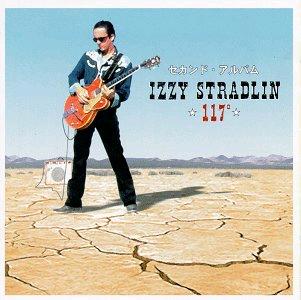
Upon his return to music endeavors, he started working on what would become 117°, his first solo album under his name in 1998.
Corresponding again in a simple way with the cover art of Izzy standing in the desert playing guitar, this album offers even more introspective classic rock, roots rock, and blues influences. That opening burning riff on “Ain’t It A Bitch” and the title track sets most of the mood of the album. There’s also a lot of different dynamics in between.
The song “Grunt” carries over the power of The Reverend Horton Heat’s muscular drums and double bass. It’s recognizable because Taz Bentley is on drums. Duff McKagan himself is on bass, with Rick Richards from the Georgia Satellites (and Juju Hounds alumni) on lead guitar. The powerhouse cast makes it possible to convey Izzy’s ideas and add even more details and power.
“Parasite” goes for some Izzy style punk rock and roll, then decelerates a bit for some slower chords and killer slide blues on “Bleedin”. There’s also that upbeat Chuck Berry cover, “Memphis”, filtered through Izzy’s own bluesy style.
With a killer second album, there were also a few missteps that happened around 117°. Izzy didn’t promote or tour behind it. Then, his home label Geffen merged with Interscope Records. He later found himself with no label.
But “that’s alright” as he says on his lyrics. No problem, as Izzy takes breaks in between albums, and now, singles, as he doesn’t need the stress and expectation of putting out new material often. However, 117° finds him in his best element, away from the chaotic glitz and glamor of the GN’R touring life, and finding his own sound and niche in honest rock n’ roll.
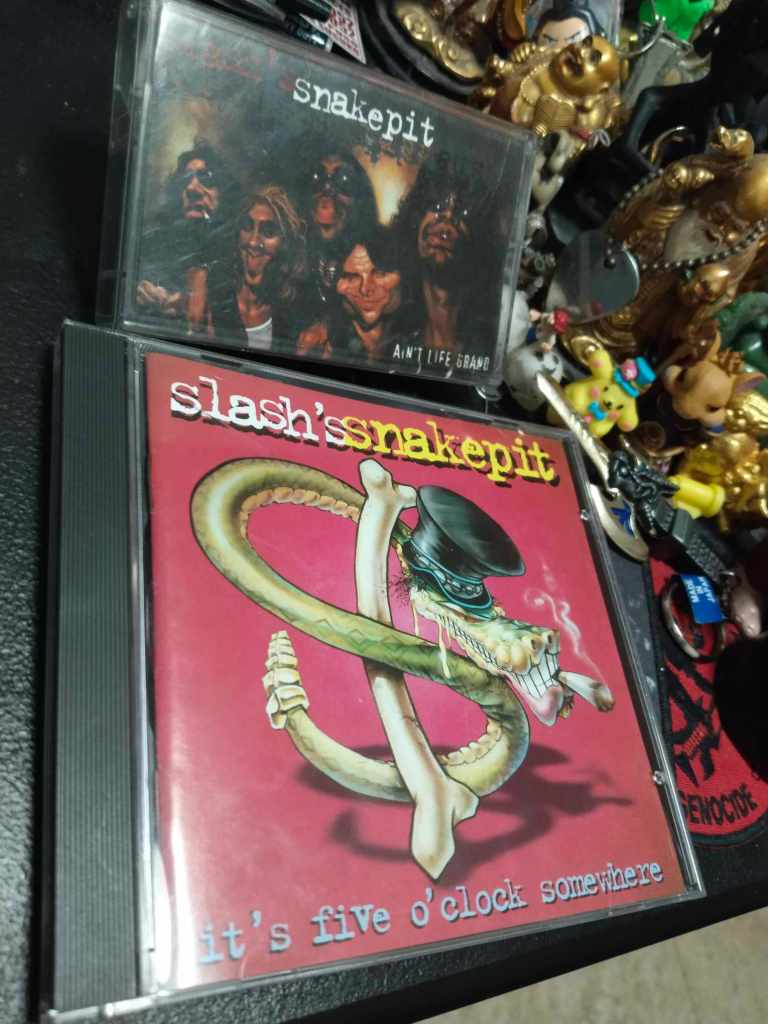
Slash took a different path when he launched Snakepit, or The Snakepit, which the record label later changed to Slash’s Snakepit, to continue capitalizing on his being with Guns N’ Roses. He started it as a full band with equal input from all members. Equally tired of Axl’s increasing diva demands on tour, he retreated to his home in LA, building a home studio and honing his own band’s material.
Snakepit was one of the first all-star supergroups in rock and roll, at least on the record. Slash enlisted friends to help jam with him and realize his vision: Matt Sorum on drums, Mike Inez on bass, Gilby Clarke on guitar, and Eric Dover on vocals and occasional rhythm guitar. Dizzy Reed also appeared on the album on keyboards.
The name of the album “It’s Five O’Clock Somewhere” was a random snippet from someone in an airport that Slash overheard. It stuck. It was also very fitting with the whole relaxed and rocking feel of his first album. Slash, finally away from his more stressful main band and free to let loose with his own style, crafted an instant classic.
Tones of southern rock, classic rock, and some of the Guns sound seemingly combined in Slash’s black hat, with added elements from each of the members. The result kicked open with a heavy, dense billow of cigarette and joint smoke with heavy drinks and proper rock n’ roll attitude. Live, the rhythm section of Pride & Glory, James LoMenzo on bass, and Brian Tichy on drums, toured with the band.
Five O’Clock is a collection of energetic, bluesy hard rock with mighty power ballads such as “Beggars and Hangers On”. Slash was finally having fun again, with no drama and a ready hard rock unit who can play at any stages without issues or stress.
Opener “Neither Can I”, and tracks such as “What Do You Want To Be”, “Good To Be Alive”, “Jizz Da Pit”, “I Hate Everybody (But You)” and “Soma City Ward” carried some of the old Guns swagger. But there’s a more pronounced southern rock touch, slow heavy blues, and soulful vocal delivery.
Slash updated his playing with different riff combinations without the roots rock arrangements and riff partnership with Izzy. It also showcased the band’s chemistry in combining southern rock and blues influences with heavy classic rock. Eric’s intense and inspired singing and lyrics added weight to the songs.
The album soon went platinum. But Geffen had other plans, particularly Slash’s money-making main band. They soon pulled the plug on financial support once they broke even with financing the record and tours. Management came a calling to remind Slash of his priority musical obligations. Suddenly, the fun was over.
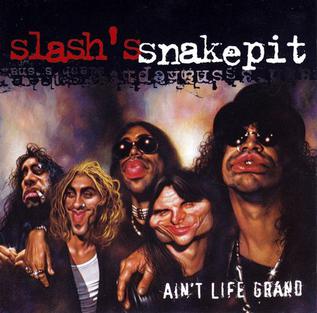
In 1996, a year after being forced to disband Snakepit and returning and then leaving Guns, Slash formed a blues cover band called Slash’s Blues Ball. After a couple of tours, he later decided to reform Snakepit and get more of his own tunes crafted once again.
Attempting to recreate the magic of the first album, Slash enlisted new partners in hard rock by recruiting Blues Ball bassist Johnny Griparic, who referred Rod Jackson for the vocal spot. He completed the lineup with Alice Cooper members Ryan Roxie on guitar and Matt Laug on drums.
Ain’t Life Grand finds a good progression from the first album. While not as successful as the first record, Slash and Snakepit still had a collection of killer tracks that have the blues hard rock dynamics of the previous album, and some pop rock blues combinations in some tracks. “Back to the Moment” shines as this album’s power ballad, refining that heavy pop rock and soul side of the band.
Elsewhere, opener “Been There Lately” and tunes such as “Serial Killer”, “Mean Bone”, and the title track showcase the revitalized energy of the band, with Rod Jackson’s lower and heavier soulful hard rock voice.
This lineup was also short-lived but lasted longer than the first one. Having left GN’R, Slash had more freedom to book his own tours without his main band or management making demands. But the lack of commitment especially from singer Rod Jackon and other issues affected his motivation. He disbanded Snakepit after the last tour. With plans to do a solo album, Slash started creating a new lineup. Another rock supergroup was already on the horizon: Velvet Revolver.


 Towards Harmonious Civilization Zine
Leave a comment