


How far can telecomms go into the far reaches of space?

by: Rallye Ryan Ibanez
A lot of incredible ideas have been stewed further in many minds about telecommunications and internet connectivity in deep space, and the endless possible applications that can come out of this concept. Many of these early applications have already happened in many interplanetary missions.
Using rover and satellite technology, we proved that sending of data from far reaches of space (or at least the ones in our galaxy) is possible. We’ve received data and images from stations and outer space equipment placed in Venus, Mars, Saturn, Uranus, Neptune, the moon, some of these planets’ moons, and even some asteroids.

Some of the basic technology, if it comes to this, already exists, but albeit on a smaller scale. This however won’t include the nether regions in wormholes and black holes, unless we have intergalactic guidance from the extra dimensional beings who created the black hole tesseract in the movies, but that’s another story.
But in all seriousness: will it be possible to build bigger telecommunications sytems and even broadband networks from deep space, or at least in the regions of other planets in the future – the deep unseen future of such magnitude – when mankind has already established pre-communities or huge stations situated in other planets? In theory, yes.

Interplanetary Telecommunications
The first far reaches of interplanetary communications from an actual planet was in Venus and Mars. The Soviet Union and later, USA were successful in landing many of their rover missions in the mid to late 60’s.
However, from 1975 to 1982, the Soviet Union’s Venera craft vehicles that successfully landed on the planet were able to take mostly clear, but limited photos of its terrain. It was a challenge and a minor success, given the intense heat and crushing and unmerciful atmosphere.
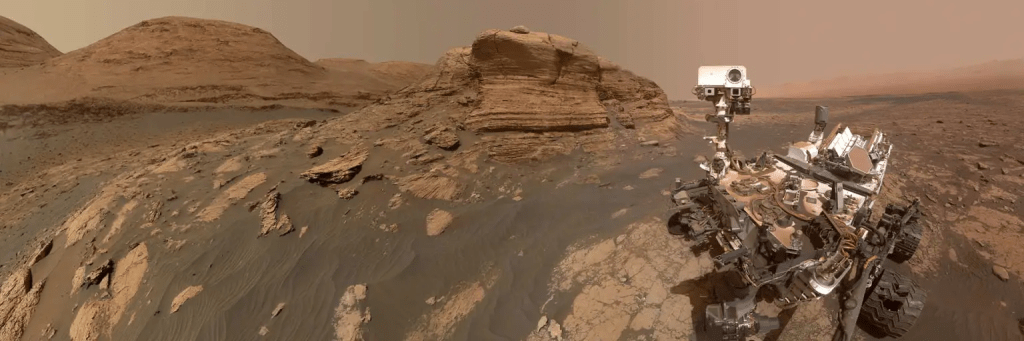
NASA reached Mars using MER-A (Mars Exploration Rover) and Mer-B in 2003. They were able to send some of the first high-resolution images of the planet. Earth was able to communicate with them until both rovers ran out of energy, but far longer than their anticipated lifespan. More rovers were able to reach the red planet, with more success, compared to Venus, as Mars had a much colder atmosphere.
Internet And Data Transmissions Equipment
Two types of wireless communications in space are already intact, in the orbiting space region and immediate areas around or near Earth. One is broadband internet and telecommunications using orbiting satellites, widely used in many homes and companies.
Another format is through laser transmissions to an orbiting station around the moon for telecommunications between space craft and space stations. This includes data transmissions, which can be one of the rudiments for outer space data transfers on a more massive scale.
NASA already has the DSN or Deep Space Network which covers the spectrum of outer space communications including Mars. This is the farthest it can cover, and will likely expand to other planets if we successfully set up a similar system covering and exploring Mars. It would be possible once and if we get a ground station successfully implanted in that planet with humans manning the exploration and analysis.

In order to stretch connectivity beyond to future destinations beyond our territory, i.e. planets from behind our location further from the sun, the probable model would be having stations in between planets that link back to main stations both at the moon and in orbit around the Earth to be able to link broadband and telecommunications to us.
In theory and on paper it might sound just right, but it’s a an exhaustive and very complicated idea to realise. However, given our existing technology and its improvement trajectory, it will be possible. Laser transmission is one of the most promising formats to achieve this, and NASA is already using this technology with good results.

Destination: Mars, and Beyond
Mars would be the safest bet away from the more thermal planets near the sun, and the closest with regards to setting up a nearby station and previous space exploration experience and previous launch success. A space station around Mars can set-up a similar orbit satellite set-up for broadband and telecommunications access in and around the planet. It can then be linked to space stations and DSN
satellites from the orbits or space stations at the moon leading us back to main base, aka Mother Earth.
And while space rovers and explorers on the surface of Mars have sent direct communication back to Earth, most of it for research purposes through analysis and images, it is still unclear as to how a broadband internet and telecommunications system will perform given great distances between the planets despite the probable set-up using interconnected networks involving satellite orbits and space stations.
As for probable future endeavours on other planets, it may be possible sometime in the future, but outer planet orbit conditions (Saturn rings, etc.), the actual atmosphere of the planets (which might affect transmissions and all wireless communications) and the mind-boggling movement of time in that planet are all key issues that we have yet to explore and solve, and only time will tell.




 Towards Harmonious Civilization Zine
Leave a comment