


from scrawlshop zine and THC Zine version 0.1
a report by: Rx Zenabi
Although Patrick Mameli dismisses the older lineups and their releases as the “past-era Pestilence” there’s no denying they were brilliant cult classics. They spearheaded experimental, technical metal laced with evil oldschool death metal that was as ominous and otherwordly as their album covers.
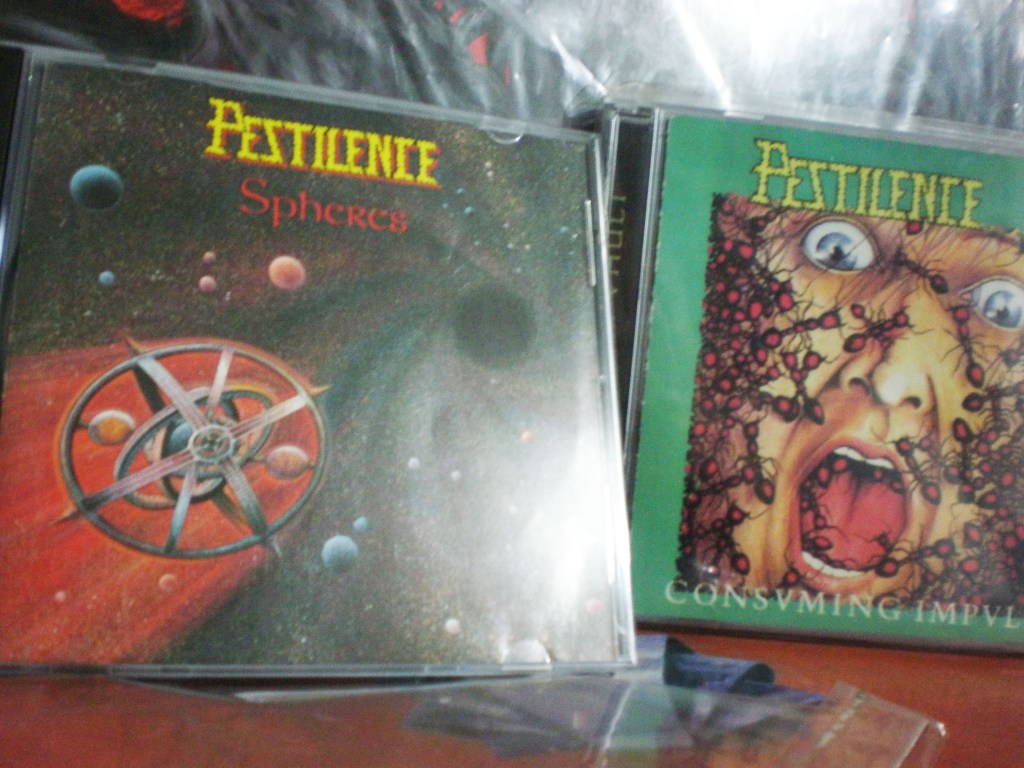
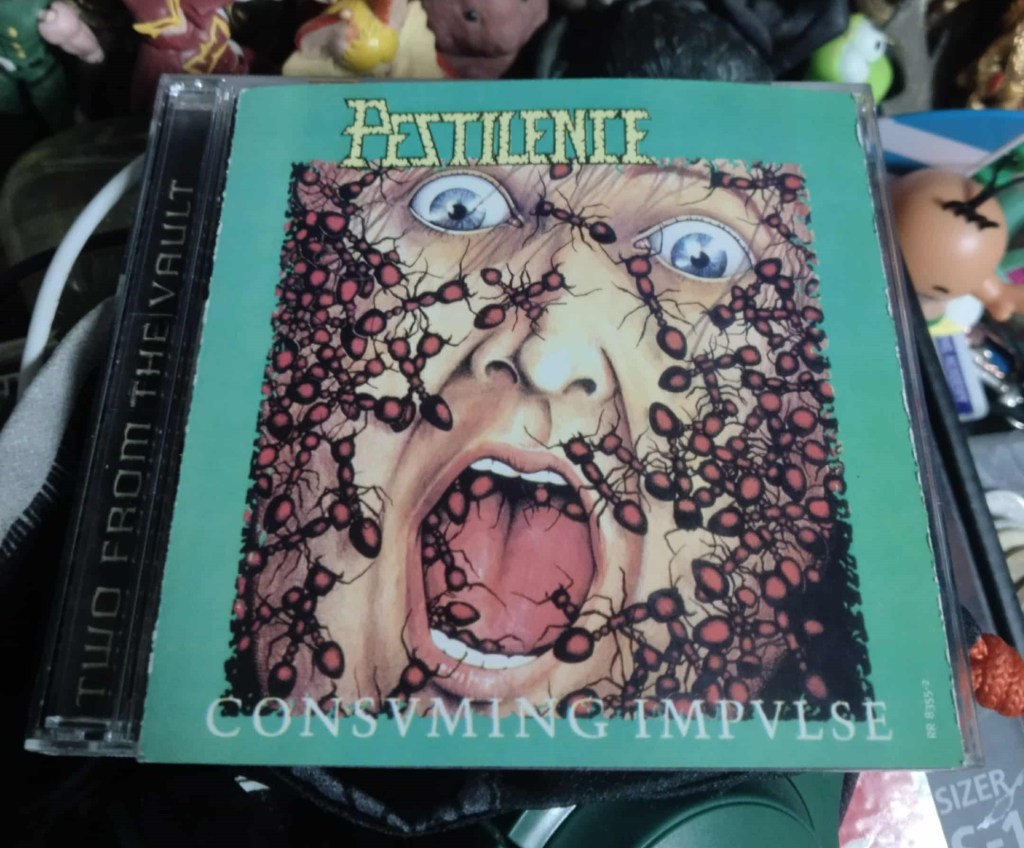
The two (3) releases in question: 1993’s Pestilence – Spheres and the 2CD set reissue from Roadrunner Records of Consuming Impulse from 1989 (F yeah) and Testimony of the Ancients – 1991 (F yeah). These two were elusive albums I’ve personally searched for a long while along with the first press of Malleus Maleficarum.
As it turned out, the album that came out next, the fan favorite Consuming Impulse, was the last recording for then future Asphyx overlord Martin Van Drunen. CI leaned towards the early 90’s classic death metal sound, as the band was one among many in the race for death metal supremacy between USA and Europe during that time. This era created tons of obscure extreme metal albums, even though other regions in the world were also creating early classics as well.
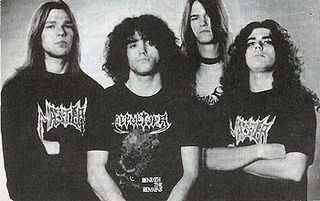
It was at this point that new lead guitar shredhead Patrick Uterwijk showed off some wailing classic solos to add to the metallic stew as his debut along with Van Drunen’s now classic vocal performance on the album. Mainstays Patrick Mameli (guitar) and Marco Foddis (drums) DEMONstrated first grade Dutch riffs and interlocked death thrash barrages with fast shredding capabilities that rivaled the best old school Floridian DM.
By this time too, a few synths here and there have found their way into the mix, segueing into some mean, extended soloing – the kind that seems to go on forever. You don’t mind though since they’re all great and intense.
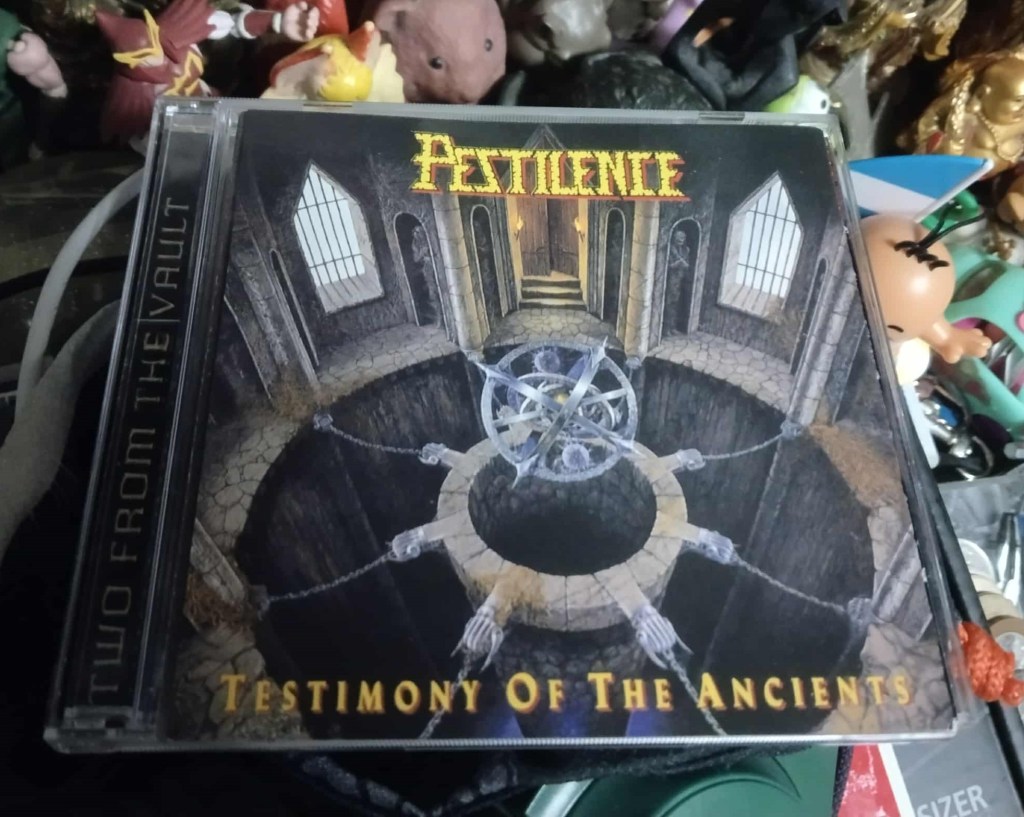
Their next leap, the next journey further into the unknown started with Testimony of the Ancients, their first without vocalist / bassist Van Drunen, who left to front Asphyx. This forced them into a trio with help from overseas ally Tony Choy who was doing some stuff with some jazz fusion metal band from Florida that you may know: Atheist (and some other band you may also know, this band called Cynic). At that time, they were occupied with writing and recording the album Unquestionable Presence. Nevertheless, Tony Choy provided some well played bass foundations for the band to go apeshit on, now focusing as a trio with two guitarists sharing the shred and Patrick now doing the vocals. How did they do?
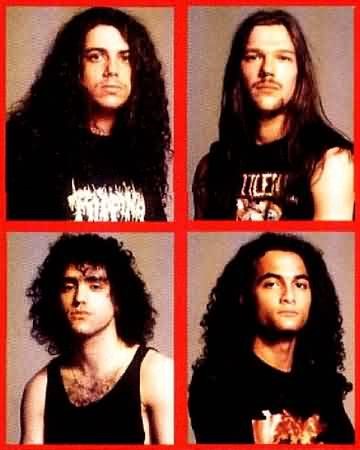
It was another victory for Netherlands for mind expanding tech death metal. The jazz fusion influence was becoming more apparent on this CD. More grand and ambitious, the sick technical infection also added some melodicism along with idiosyncratic riffing and dissonant elements. Mameli transitioned effectively to his new dual role, while the band overlapped increasing songwriting and technical prowess.
Tony Choy, not really part of the main core but more of a live sessionist and studio personnel, subsequently left to concentrate on Cynic and Atheist. Pestilence soon enlisted an equal powerhouse bassist from their side of the globe: future Obscura bass slinger Jeroen Paul Thesseling. But not without proving his mastery of the instrument in this recording.
The use of samples, synths, and pianos increased, but wasn’t too dominating, used at introductions or in between spaces, to add an almost alien dread to some of the passages. There are a lot more mid tempo ragers, double bass action and more technical flourishes in the overall sound. Pestilence were trying to prove they can be brutal but also technically proficient and musical.
There was also a more pronounced fluid and pensive, melodic soloing style at times which they will be able to utilize along with their jazz fusion molten metal style on Spheres (due in part to Tony Choy’s indirect influence with his work on Cynic and Atheist’s albums during that era). At this point, Spheres seemed like a world away as Pestilence perfected their tech death thrash with more aggressive, early death metal styled vocals using a big Morrisound budget and production and a burgeoning cult following worldwide.
Of course, Testimony of the Ancients also marked their recording debut with none other than Florida Death Metal figurehead, and Morrisound BOSS, none other than producer / engineer Scott Burns whose mark appeared on seemingly anything old school and brutal and USA and death metal during that time, with a stamp of approval that reads “Produced by Scott Burns” that effectively warranted mass hysteria and hype over purchasing a certain death metal cassette (yes) LP or CD.
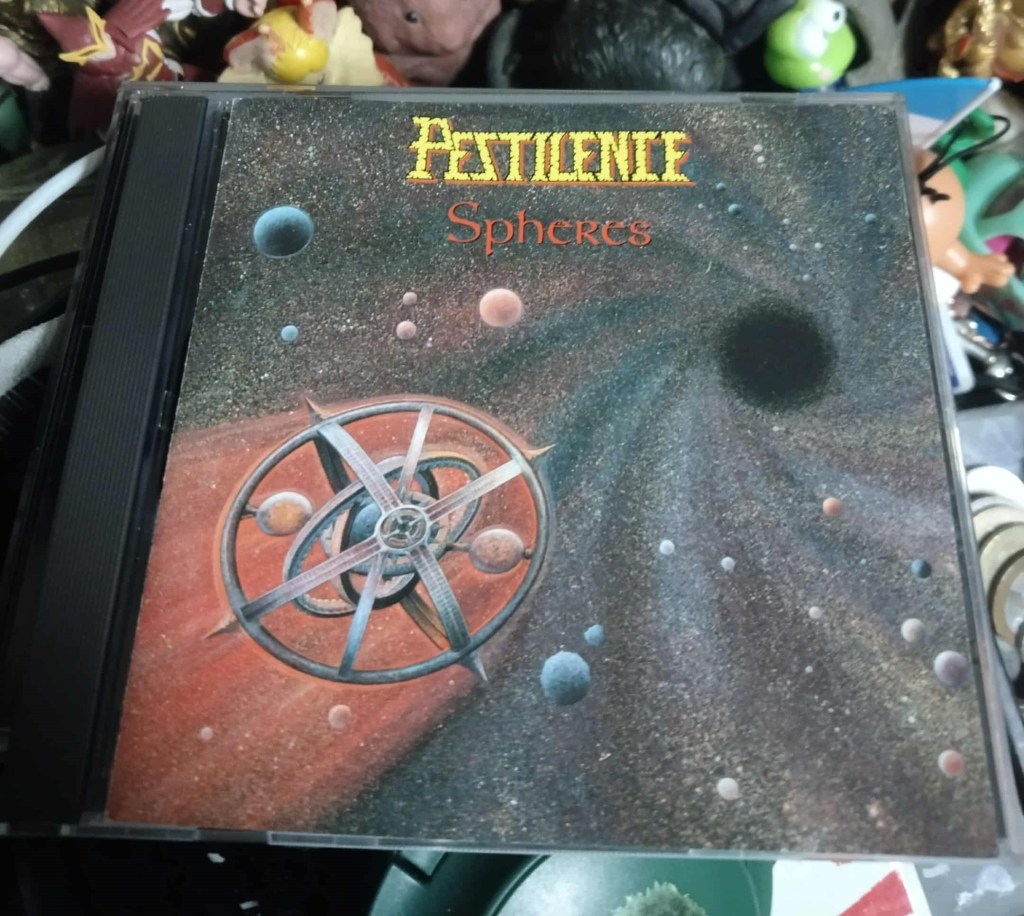
Spheres (1993) is the final recording featuring this lineup, which extended the jazz fusion death thrash experiments throughout the album. It served as the last bookmark of this era and age when Pestilence perfected their craft and then took a risk by increasing the presence of fluid, technical jazz fusion played through death thrash riffing and arrangements.
The technical elements were not totally a left turn but more of an increased presence in the music. Chord shapes, transitions, and changes sound more expanded, with no keyboards but plenty of guitar synths and a growing emphasis on odd-timed frameworks and jazz fusion parts played with metal riffs, chopped up in weird meters.
Many didn’t like this new direction though, as the whole tech death thing starting with Death, Cynic, Atheist et al started to take shape and our heroes dabbling fully into this sub section of their minds coincided. Many believe the indirect inspiration of Choy’s work in Cynic and Atheist may have sparked this, but the band was already veering that way anyway.
Whereas Atheist and Cynic used swinging jazz metal and weird progressive otherworldly music respectively, Pestilence attacked it by using it in the structure of their songs as well as pure fusion music tinged and dosed with traces of death metal but tweaked further; They were more confusing and difficult to follow with no pissed off ultra fast death metal rage to go crazy and party to. Instead the band’s new found sound demanded a more focused, heady listen that entails a sit down for the brain to begin piecing together what was happening and unravelling.
Fans were confused and initially disowned the album. Those who “got” it saw the endless possibilities and further mind exploration that it can induce. This album was also later hailed, along with the usual suspects as one of the works from Morrisound Studios that was just ahead of its time and appreciation during the brutal and evil wars of the oldschool death metal era of the early nineties.
The first press of the CD featured a shooting metallic sphere towards the infinite void of space, as well as lyrics venturing deeply inward through the caverns of the human mind and it’s thought processes, venturing even further away from the gruesome death metal imagery of the past three albums.
Pestilence, Post-90s Era
Nowadays, Pestilence is spoken of in high regard and ultimate veneration by some of the more discerning death metal fans not only for the notoriety they achieved as a brutal death metal band but as a visionary technical metal band that borrowed as much as it did from technically skilled, well thought-out metal. Mameli and the gang extracted sulfuric essences as well from fusion, prog, and jazz with weird mindF guitar synths, and let alone be able to make an album out of it, even if listening to it is a completely different thing.
Many took years before they finally unscrambled and decoded these succession of notes, words and structures into the songs that comprised Spheres, to challenge the listener and bring him to different journeys, may it be to other worlds or worlds within as well. It may not be the best way to end the band during that time, but it was an album that stood out more for their brash courage and tech skills, and is now well loved among Pestilence fans, at least as a record that stands on its own, a brave risk from a fearless band that doesn’t give a shit what people (even their fans) wanted to hear, that proved to be worth taking in the end anyway.
Pestilence knew they won’t be able to top the insanity they achieved skill and songwriting wise on this CD. There were also increasing band tensions. With these realizations, they decided to break up. Pestilence went on a long hiatus and didn’t return until 2008.
They released follow up albums later that were well received but didn’t make a huge impact as the first four albums. They were 2009’s Resurrection Macabre (a return to their more death metal, death/thrash roots) and Doctrine (2011) featuring Mameli, Uterwijk, Thesseling and new drummer Yuma Van Eekelen who replaced Resurrection Macabre’s skinbasher / timekeeper Peter Wildoer. Heck, even Atheist and Cynic reunited / reformed during this fantastic era of technically inclined metal that seems to be even light years ahead, more spastic and more insane than ever, being totally, truly OTT.



 Towards Harmonious Civilization Zine
Leave a comment