



by COMMANDER ENTERPRISE
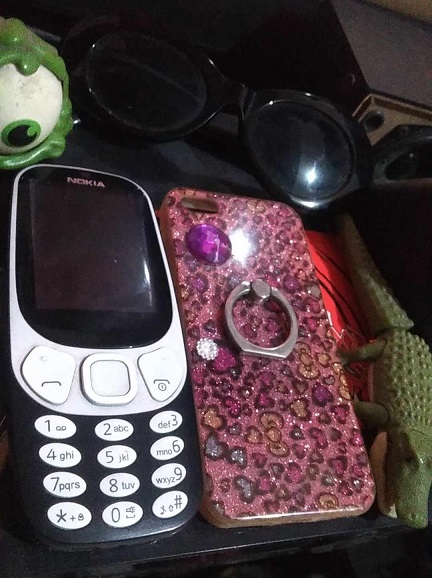
Smartphones and surveillance are two common paired themes we all find in movies, pop culture and even the news sometimes; anytime the bad guys mistakenly use their phone for their evil deeds, the good guys easily track them through GPS and apps, just because the phone has advanced features within that can be used and exploited.
No one can blame the bad guys (or extremely secretive phone users) for using a phone because it is totally vital to their operations. But these blokes aren’t so smart at all – if only they knew better. Or maybe some of them already do.
Tracking is mainly done by these methods, and they’re usually very accurate and reliable. But there’s a catch – it only works on smartphone-toting blokes, for all the obvious reasons. This is what makes older model phones (aka burner phones) highly valuable items, since they’re more primitive and less prone to accurate tracking. It keeps highly “private” people from being compromised, to the point that some of them rely on these otherwise forgotten phone models to carry on with their bad selves and operate without detection.
How do they do it? Two words: Older technology. Old phones. Apparently, incognito users don’t take them for granted because in many cases, older is leaps and bounds better. And judging from reports around the net, from secretive individuals hiding, to UK drug dealers using Nokia 8210’s, the concept is reliable, and most of all, it works like a charm.
Capitalising on the obvious
Smartphones have acceptable-enough loopholes that can be used to crack into and then access the unit, and from there, access the microphone, speaker, and camera and use it for identifying locations and activities and also direct spying. Anything from smart watches to apps can be activated and use wireless technology (NFC, DLNA, Bluetooth etc.) for remote control even. And of course, its GPS can be used against the user for tracking.
Tracking and surveillance on smartphones is already a given. Its built-in GPS uses signal communication with a satellite, and is used to reliably track and pinpoint the location, whether they may be someone wanted by the law, a valuable police target, or as a tracking device to follow a vehicle. It can also be just a plain tracker for a family member, an employee or someone who gets lost every Friday night (most likely from too many random pubs). Some apps even automatically checks-in a person at certain spots or establishments, and also have notifications. The battle is half won (or automatically won) when the target uses a smartphone.
These are the reasons why older mobile phones are preferred, and they are much harder to track. Without any pre-installation or preparation access (using physical parts and not to install apps), it would be impossible, since no one can even possibly know which phone is to be used and then access it.
The only way tracking can be done directly is through “cell phone triangulation” or mobile phone triangulation, which pinpoints the rough location area by checking on the signals of communication with the three (or more) nearest communication towers. Mobile phone tower signals and networks run these signals back and forth and can provide a rough location area where the user is, or was, and when the phone is being used.
Just the process alone depends on when the phone is in use and how many network towers are even in the area for a known target already provides a very narrow trace path. In most cases it will only work for identified phones that are closely monitored. It will be able to help track the owner only at a certain area, but not the exact position and coordinates. And for a moving target it also adds to the time element because it will only show the last known location where the target was last seen.
The owner can always stay a step ahead, unless there is a real time tracking device installed, and the SIM card used is registered and previous information is already available on the number. These are crucial things that are needed to even start tracing.

A few other things
The only things that could help track an older phone is to have actual physical access to it before it is used, and have a GPS chip installed, or a tracker of some sort. Good luck trying to get the phone from an unknown target.
If the actual phone number of a target is even known at all (which is also the main issue), it can be used for actual look-ups, either with the most common (by Google or web engine search) through the service provider’s systems, or using a reverse phone number look-ups online.
Any information gathered though would not be enough to give helpful information, unless the number has been listed on directories, is posted online and accompanying information exists, which is highly doubtful. None of these online “track the mobile phone number” services aren’t worth a buck even and cannot give any real clues, either.
Mobile phone tapping is also possible, and some covert tapping can be done using wireless network devices, which can act as smaller phone towers. But they will only work when the phone target is either known where, is being followed (or the real time location is also known) and more importantly, around the device’s limited coverage area to infiltrate calls, read text messages and even photos and files. But even this is considered useless since the target’s specific location has to be known in the first place. You also have to setup your operation in the limited coverage area of the target. This alone renders the operation useless.
The main problem is in always knowing who and which phone to tap in the first place. These phones are underground, unknown, and operate below the radar, with users who know where to be and what places to avoid. Given other possible but very limited methods, this concept is still very difficult to achieve and has a lot of very demanding needs met before it can be successfully used, since these older phones are received fresh and unknown by the (new) owner, and from there it is good to go.



 Towards Harmonious Civilization Zine
Leave a reply to Towards Harmonious Civilization Zine Cancel reply