


by COMMANDER ENTERPRISE

It’s easy to just take for granted all the awesome technology and everyday gadgets that we have today, with smartphones, broadband internet, fibre internet, NBN and the like already considered as national standards.
Kids and young adults today are lucky or unlucky to have not gone through the 80’s and 90’s when there were larger, less technical and more simple stuff that would baffle and alienate them to no end.
But hey, those who forget the past are condemned to repeat it, but only theoretically. The past can be downloaded, copied or bought on Ebay anyway, and past nostalgia and knowhow with help and guidance from Google and many others. But unless needed or really wanted, it’s not necessary.
There are definitely numerous traces of these long deleted, confusing tools stacked somewhere in unused bins and drawers with memories of simple and limited capabilities considered top shelf in those days, compared to the advanced accessories and computer parts we have today that people nonchalantly regard as the norm. These were the rough origins of the present, like looking at cavemen tools and culture, or not, depending on how it is looked.
Before the current state of computer and gadget revolutions that we have today, these seemingly archaic prototypes are what we had, what we were at back in those simpler times. A rather fitting tribute is in order for these things that used to help subscribers and users. They were just slowly fading into past obscurity from the previous decade, actually. And in case it feels nostalgic but weird, the first three are all related, and demand a separate section alone for their uh, legacy.
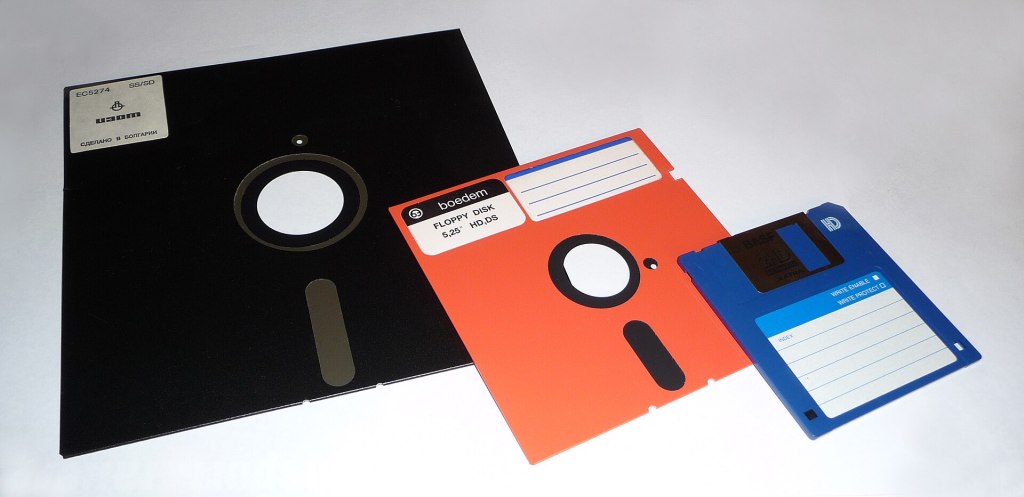
The Floppy Disk (or the 8 inch and the 5.25) – the floppy disk is an ancient phenomenon that was used widely back in the glorious 80’s for storing data. For the popular (back then) 5.25 inch format, the maximum allowed said data: 720k and 1.2MB (for double sided models). It couldn’t even fit a single mp3 in it without cutting the song in half via a separate audio app or program and encoding it in the lowest possible bitrate and making sure the song is short enough to make it no more than 1.2MB.
And even if it that happens, it has no other space for anything else! It may be tough to know that the 5.25 inch format actually still sells in limited quantities these days, for whatever reason. Holding these disks, especially if one gets a hold of the long gone 8 inch, feels like holding a 7 inch record, itself an archaic format that is alive and well today. The 8 inch floppy isn’t.
The diskette (or the 3.5 inch) – although the Floppy ultimately evolved into a smaller and compact version with a read-write guard and fits most shirt pockets, the space was still too limiting, with the early version at the same 720k on a smaller package and the already-maximised-but-still-not-enough 1.44MB (already called High Density back then).
Although long regarded as archaic, even ancient (hey! – computer “seniors”) by many, it is still widely used by a small percentage who own computers with old disk drives for these formats, and for whatever other reasons there are.
The floppy disk drive – Since the 5.25 inch floppy and the 3.5 inch diskettes are still around and being bought and used (albeit in very limited circles only), it just follows that the floppy disk drive still exists, beating the laserdisc and mini-disc (!) even, just by the fact that people still use them and they are still around, and it just baffles the mind.
There are still many older computers that have that (un)used extra drive that looks funny, but wait till that person one day uses a diskette on this drive and discovers the past and jar that person’s reality one time.
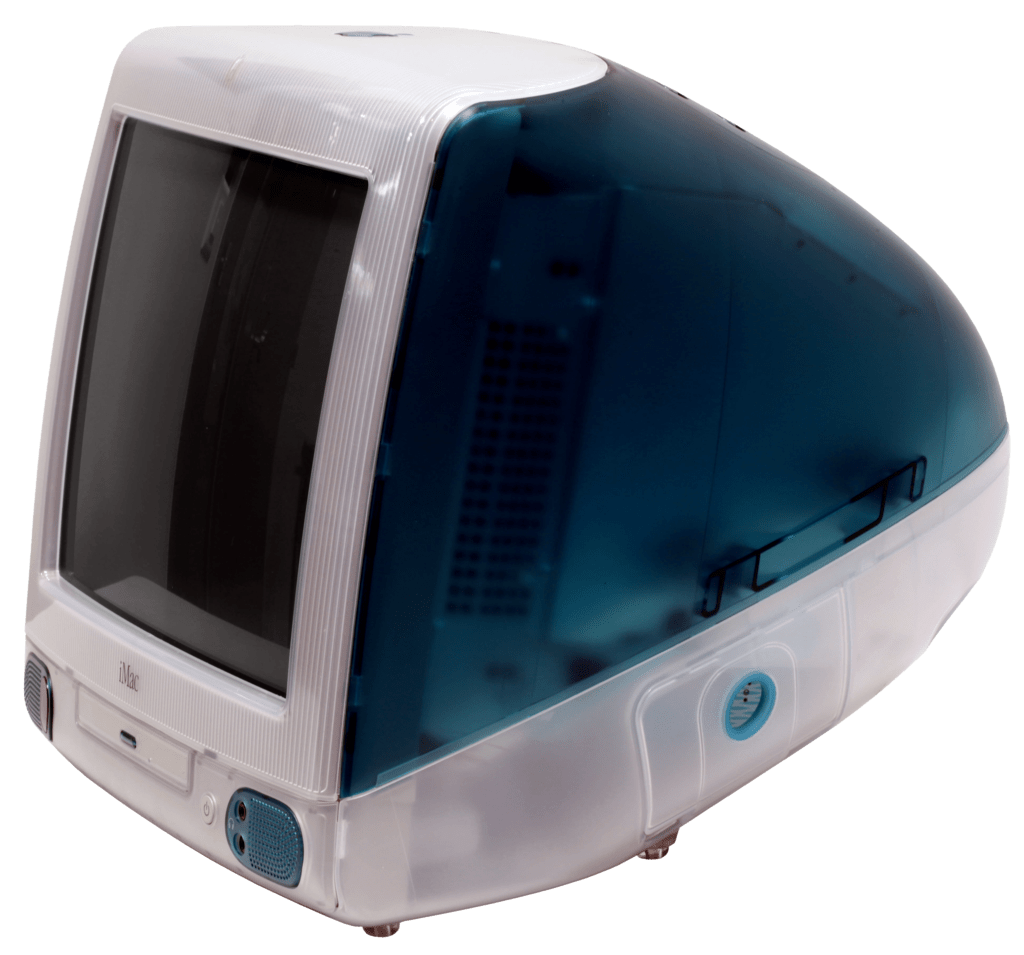
The old, bulky, TV screen-style monitors – before the introduction of flat screen monitors now accepted as the standard computer and mac monitors today, the computer world used 3 dimensional bulky TV’s and TV style monitors. This includes the previous (actually good looking too) version of the Mac, The iMac G3.
As in 3D, yes it has a flat screen in the front and looks less resolution, but the real surprise is when people turn it around to see that huge bulk of space flat on the sides and extending all the way to the back. How is it supposed to fit those minimalist cabinets or tables now? Imagine this dilemma and imagine how it was back when this extra space was accepted and computer tables and spaces were too big along with everything else it was used with (pretty much some of the items on this list and the previous one).
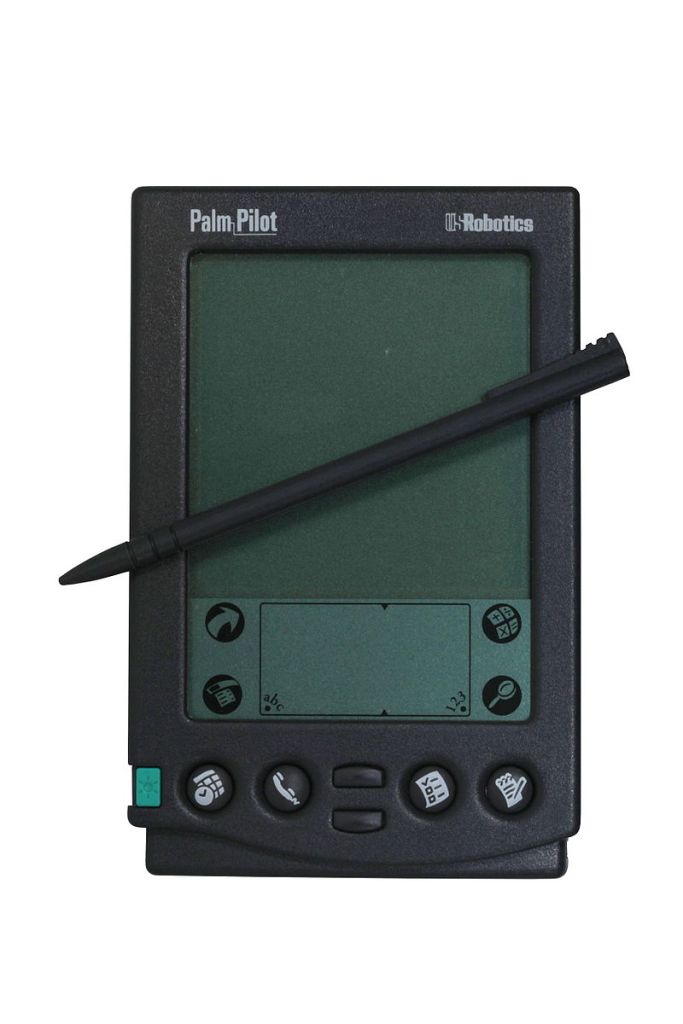
PDA’s / The Palm Pilot – Let’s face it, Personal Digital Assistants or Personal Data Assistants have pretty much been taken over by smartphones, tablets and other handheld gadgets. Actually the whole lot of them, save for an actual computer, mac or laptop or even macbook air. And year after year they become more advanced and more features-heavy that it’s feared that one day they just might, totally.
More or less reduced to a novelty item, or an electronic organiser, it was inevitable that they would be easily bounced off by natural (E-) selection and (digital) evolution. But it doesn’t mean that they totally don’t exist anymore as some living (read: operational) specimens have been found on those who find its charm and simplicity still usable for their daily activities.
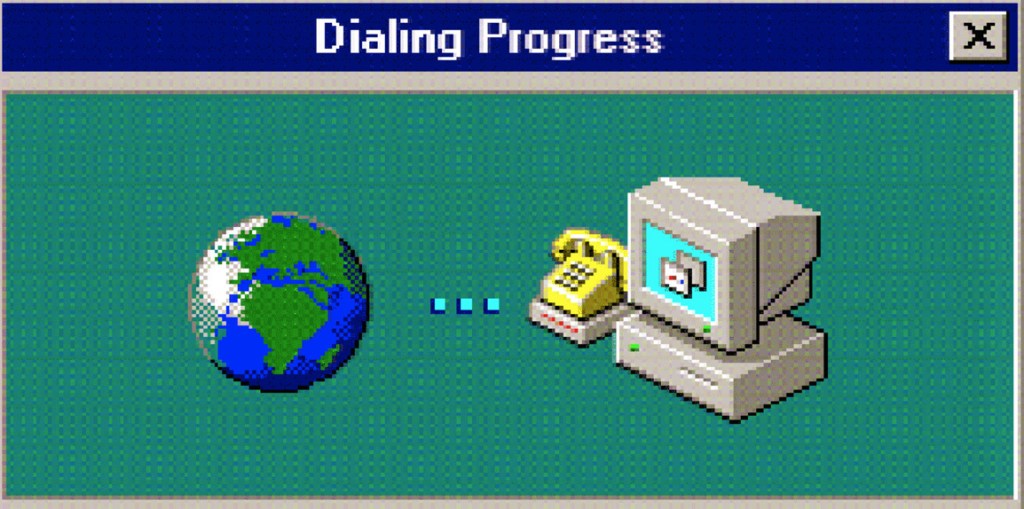
Dial-up Internet – No one uses it anymore, or so it seems, until people realise their mistake when they see it among those in an Internet Service Provider’s service menus. Yes, dial up is pretty much a living legend / ancient living specimen from the pre-broadband internet age when also dial-up password hacking, cross lines and not being able to use the phone and the dial-up connection at the same were still around.

Some of these might have been sorted out, but dial-up still stands strong and proud. It’s cheaper and does the job for low-bandwidth internet ONLY – nothing more, nothing else. And oh, it uses the lines for PSTN (Public Switched Telephone Network). NBN and fibre internet is already around the corner filling up most of the world in the coming years, and still here it is, and that alone commands utmost respect.
Go to Part 2



 Towards Harmonious Civilization Zine
Leave a reply to Top Ten ANCIENT Computer Tech from the 90s! Part 2 – Towards Harmonious Civilization Zine Cancel reply