
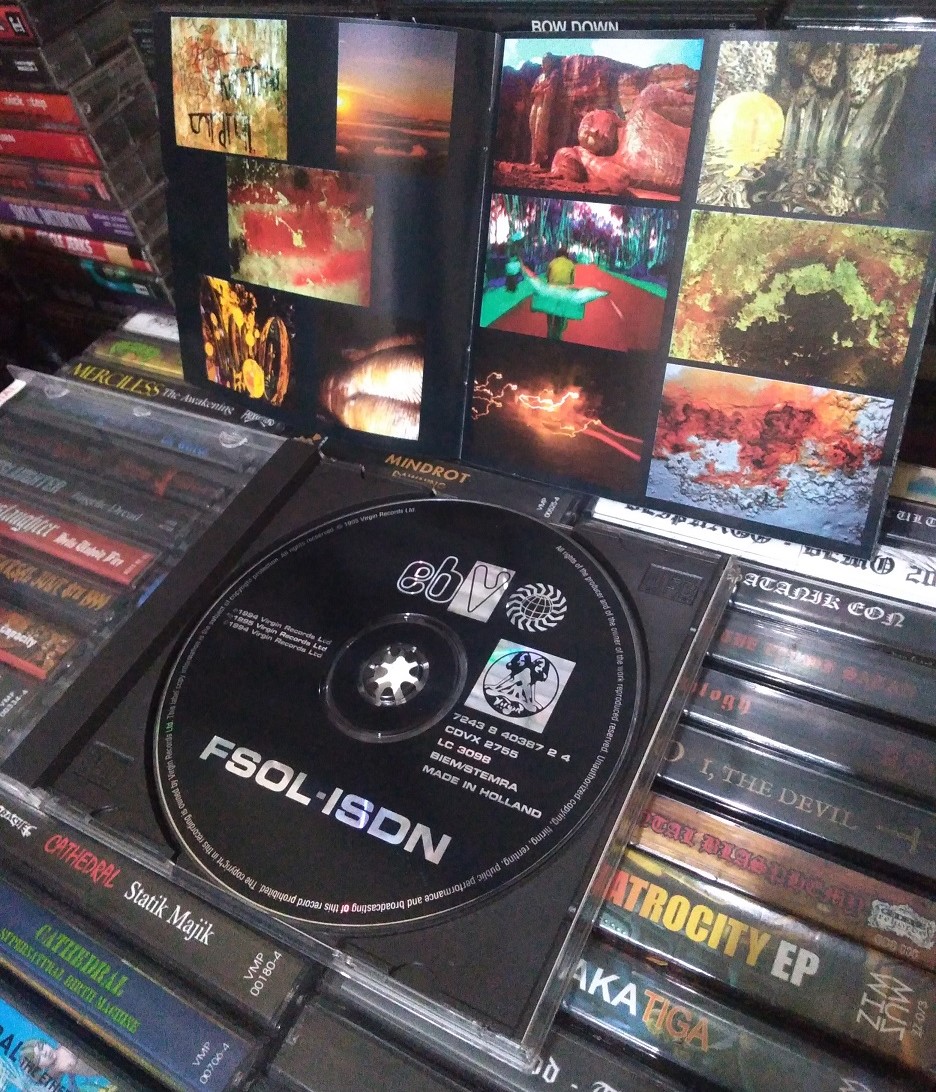


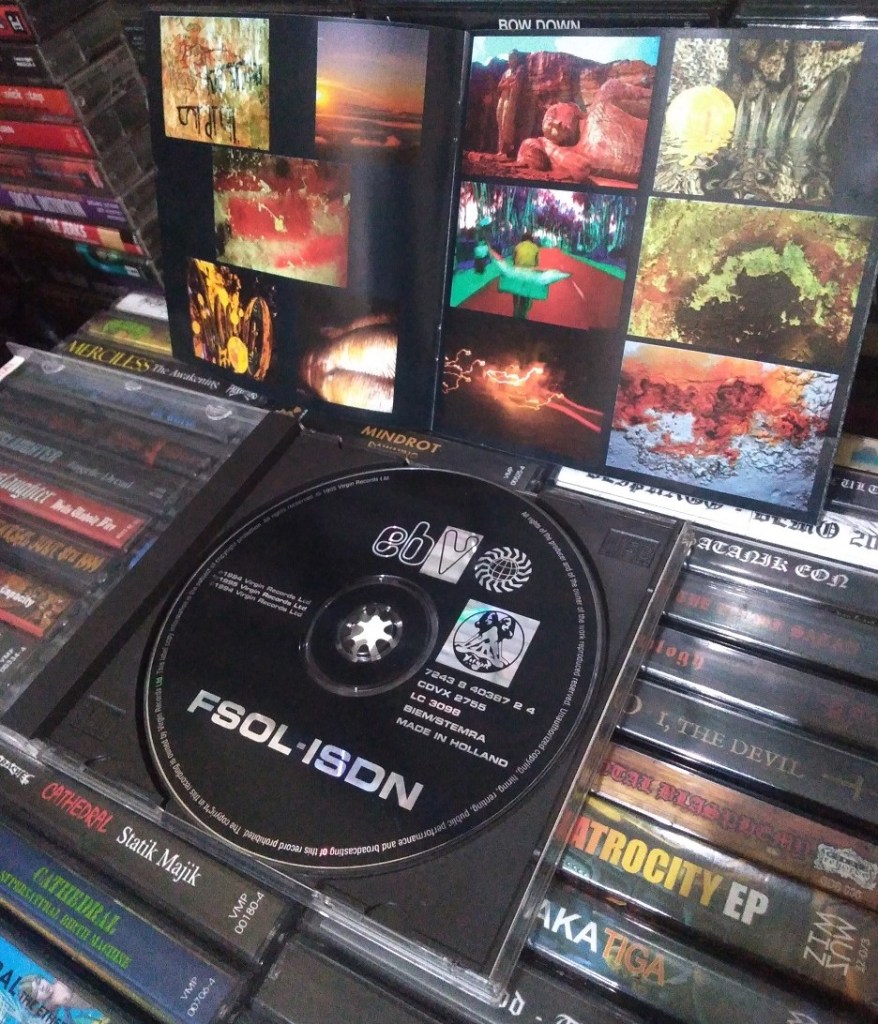
a JOINT effort by COMMANDER ENTERPRISE & R. Ibanez
ISDN, short for Integrated Services Digital Network, refers to a hybrid digital format in the world of digital telecommunications. It delivers voice, data, graphics, and other components at the same time, using a traditional PSTN or public switched telephone network.
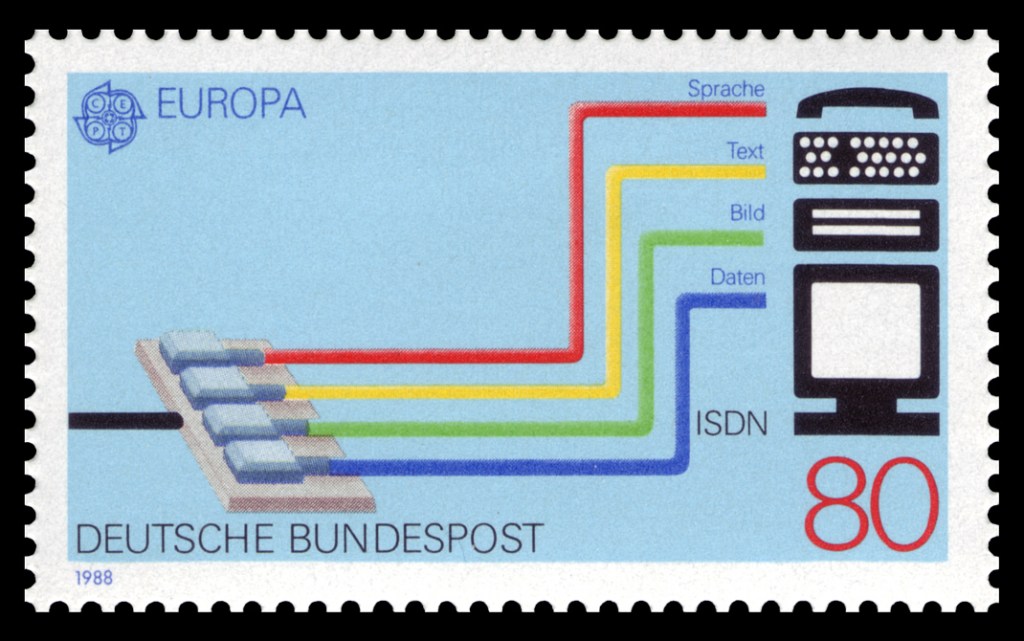
Just as the name implies, it combines at least two or three component services into one digital transmission line and assures uniform speeds throughout. This is very much applicable to telecommunications services with data and multimedia-enhanced telecommunications, data downloads and uploads, fax services, and other hybrid telecommunications.
The 90s and The Future Sound of London
Its 90s glory days, ISDN seemingly became a cutting-edge format in the mid to final dial-up eras of the internet, for its ability to carry voice, data, and multimedia services in one main line connection. It was also faster than the normal dial-up connection which was at a maximum 56Kbps speed, whereas a normal ISDN connection had a 64kbps (single channel) to 128kbps speed range (for those that have two channels, at 64kbps each).
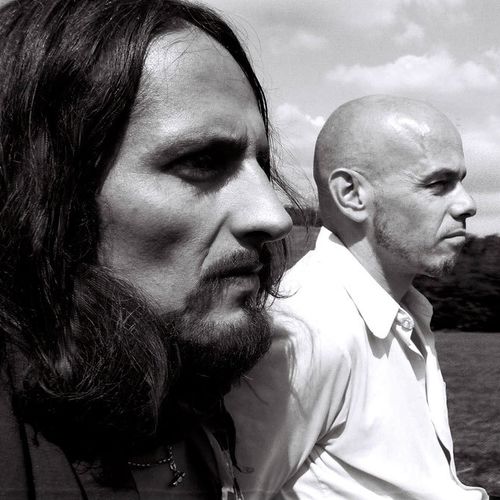
Prominently, British electronic music duo Future Sound of London released two versions of their album ISDN in 1994 and 1995 and was made up of their live music broadcasted over ISDN lines to various radio stations.
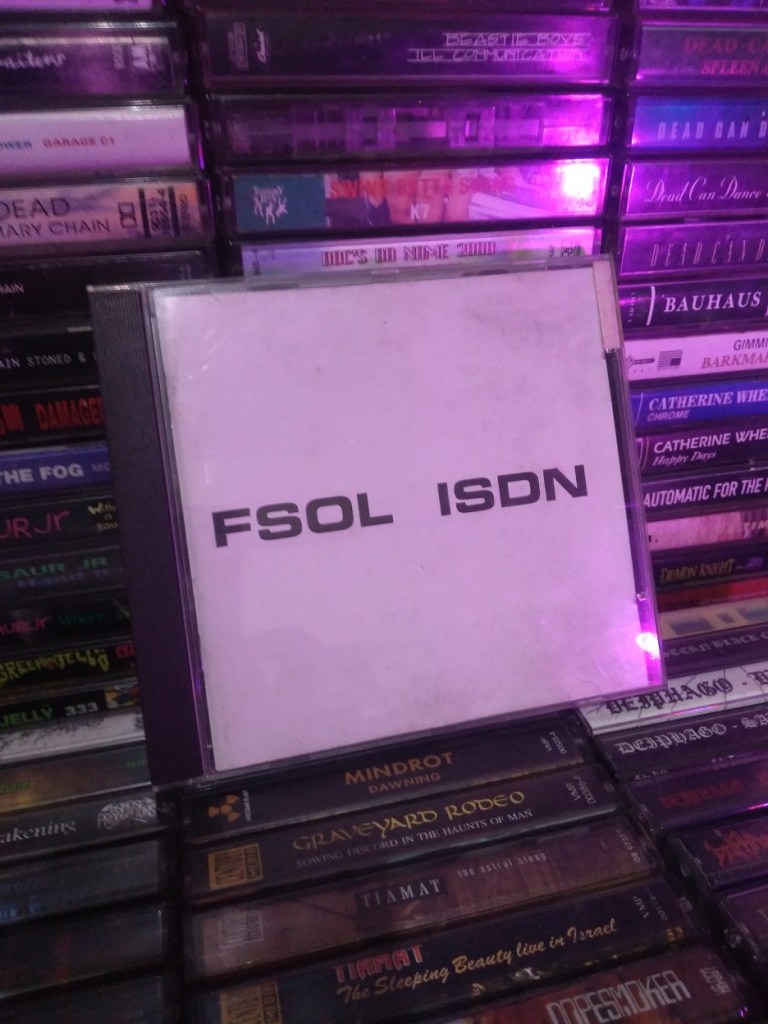
This was again repeated with the 1997 album, ISDN Show, which was, as the name implies, a live FSOL show that was “netcast” using ISDN technology again. It was one of the first times that musicians used digital global transmissions via this technology, and at that time era, it seemed like it would be one of the next big formats in telecommunications and the internet.
The ISDN format, today
These days, ISDN isn’t a preferred format for most data transmission and internet connections and is used primarily for telecommunications. Since its heyday in the mid-90s and into the very early millennia period, it has been eclipsed by faster and more reliable broadband internet services such as ADSL, Cable, 4G Wi-Fi, NBN, and a few others. This is due to the speed limits of a typical ISDN connection which could only be anywhere from 64kbps to a maximum of 128kbps, which isn’t really a lot compared to the more common formats we already use. It is used today in many businesses and companies for phones and smaller data transmission applications.
Most normal ISDN connections that are still around are the Basic Rate Interface type, which is used by residences and smaller businesses, and it carries two channels that service 64kbps each, totaling up to 128kbps; The other format which is the Primary Rate Interface type, is used by bigger telecommunications businesses and organisations, and uses several channels with a 64kbps rate each, and capable of much faster data and voice transmissions.
However, much like the much-maligned dial-up, ISDN still does exist and does deliver, but it’s still very limited and mostly appears in its faster form in the PRI format or Primary Rate Interface. Its inability to keep up with the newer and much faster transmission formats has since relegated its fastest version mainly to telecommunications use. Still, an ISDN set-up today for a business or telecommunications company will have enough channels for setting up reliable and high-performing digital phone networks, or a combination of phones, telecommunications equipment, and fax lines.
+++++++++
FSOL
ISDN
Virgin Records
(review by: R Ibanez)
ISDN is pretty much a live album by electronic experimentalists FSOL or Future Sound of London, using ISDN digital phone link technology. These tracks were transmitted live to radio station networks in Holland, Europe, and New York, from Earthbeat Studios in London, back in 1994, in some sort of guerilla-radio style transmissions.
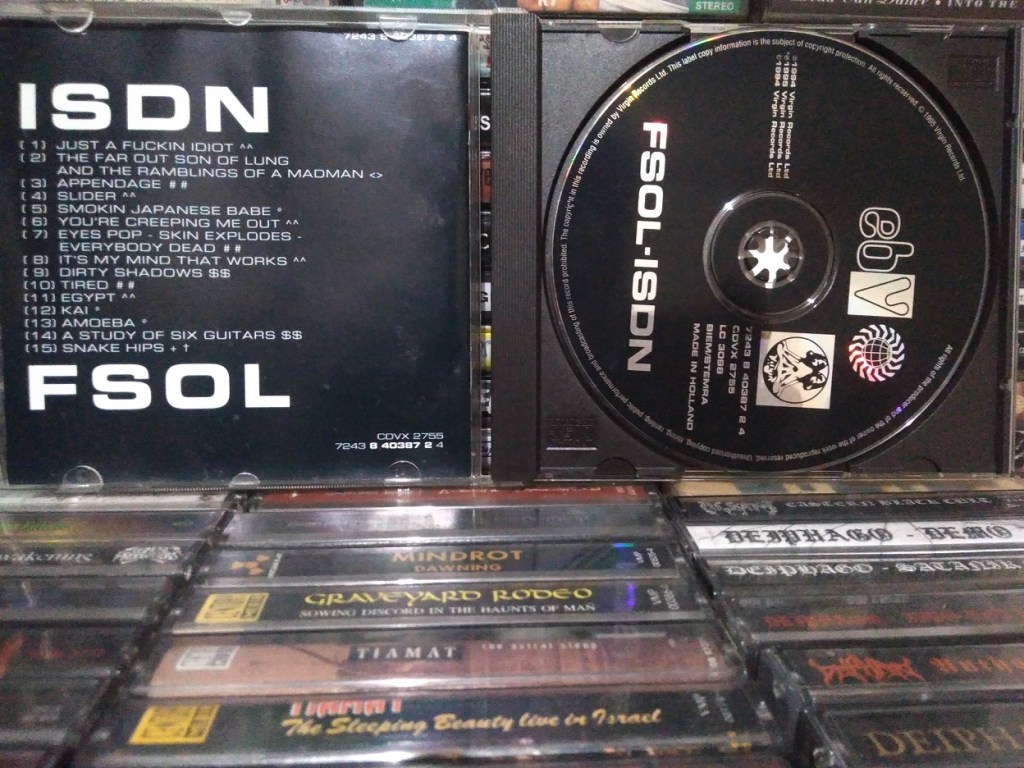
The difference between this and the majority of live albums was there was no audience to engage and interact with. It was a collection of studio performances transmitted live and collected as a release.
But even then FSOL was firing on all cylinders with a psychedelic mix of downtempo beats, triphop, ambient, and electronic beat-driven intensity that in the 90s many termed electronica. But this was just a general umbrella term for all types of experimental, techno, and mainstream industrial music that went on to that late 90s MTV hype.
FSOL at this period was more downbeat, trippy, and experimental than many of their jittery, dancey, or more aggressive peers that caught the attention of the MTV generation. ISDN proved that as far as live albums go, you can capture a live set, or sets, and have the same kind of red-hot intensity and performance without crowd interaction or feedback.
The comfort of the studio without the anxiety and live crowd noise added to the atmosphere of ISDN. Some of the guitar parts are from their live jams with Robert Fripp of King Crimson, adding textural flourishes in the midst of the heavy calculated beats and electronic sounds. After the same Crimson alumni Adrian Belew’s earlier heavy, noisy collabs with NIN on The Downward Spiral, Fripp’s electronics collab is in contrast more sample-like, and meditative, playing along with dark, heavy beats on “A Study of Six Guitars”.
ISDN’s darker, warped, and trippier downbeat style on this live album sounds great and played as one whole album. The fact that these tracks were from three different transmissions through the cutting-edge tech of ISDN radio transmissions, there is still a steady and hypnotic flow that’s perfect. It sounds fantastic, given the maximum bitrate of ISDN and the resulting live sound from the radio netcasts.
Many people aren’t even interested in or even aware of ISDN these days. But in the 90s, its future sounded bright, until ADSL and fibre went on and became the standard for internet and streaming. Despite that, FSOL managed to create a killer album that maximized the possibilities of a now archaic form of internet technology, and regardless, it stands as a great electronic experimental record and remains one of the best in FSOL’s discography.



 Towards Harmonious Civilization Zine
Leave a comment