

Originally from THC Zine v.02 (2018) by: VVV
(CD photos from Rx Zenabi’s personal collection)
Bass guitarist, experimental maven, composer, and top collabor-ist Bill Laswell has to date been in countless different recordings and collaborations in the underground experimental and avant-garde realms. Growing up in Michigan’s musical melting pot, exposed to a diverse array of music, from Motown and R&B to proto-punk, rock, metal, and all sorts of experimental and jazz, Laswell embraced all forms of sonic deviations and didn’t segregate them. In his world, these sonic elements can be combined and fused to create new musical adventures.

One of the many projects that he created with this visionary approach was Praxis, an experimental, avant-garde rock/metal/fusion band that broke musical boundaries, in 1984. Coincidentally, there was another Praxis in the early 80s from Spain, which specialized in traditional heavy metal. They coexisted in this musical cosmos without issues, and that particular band lasted until 1990, releasing one album and one single.
Bill Laswell released the first Praxis recording in 1984, entitled “1984“, basically his solo project of electronic, beat-driven music loaded with samples on a 45 rpm 12” EP.
It would not be until 1992 when Bill would release a fully realized Praxis album, Transmutation (Mutatis Mutandis), where he and his new co-conspirators melded more out-there avant-garde and prog experimentation with his early electronic influences with pastiches of metal, jazz fusion, psychedelic, and ambient/dub.
The lineup now featured Buckethead on guitar, Brain Mantia on drums, Bernie Worrell on keyboards, Bootsy Collins on space bass, Af Next Man Flip (Lord of The Paradox) on turntables, and Bill on bass, samples, and experimental sounds.
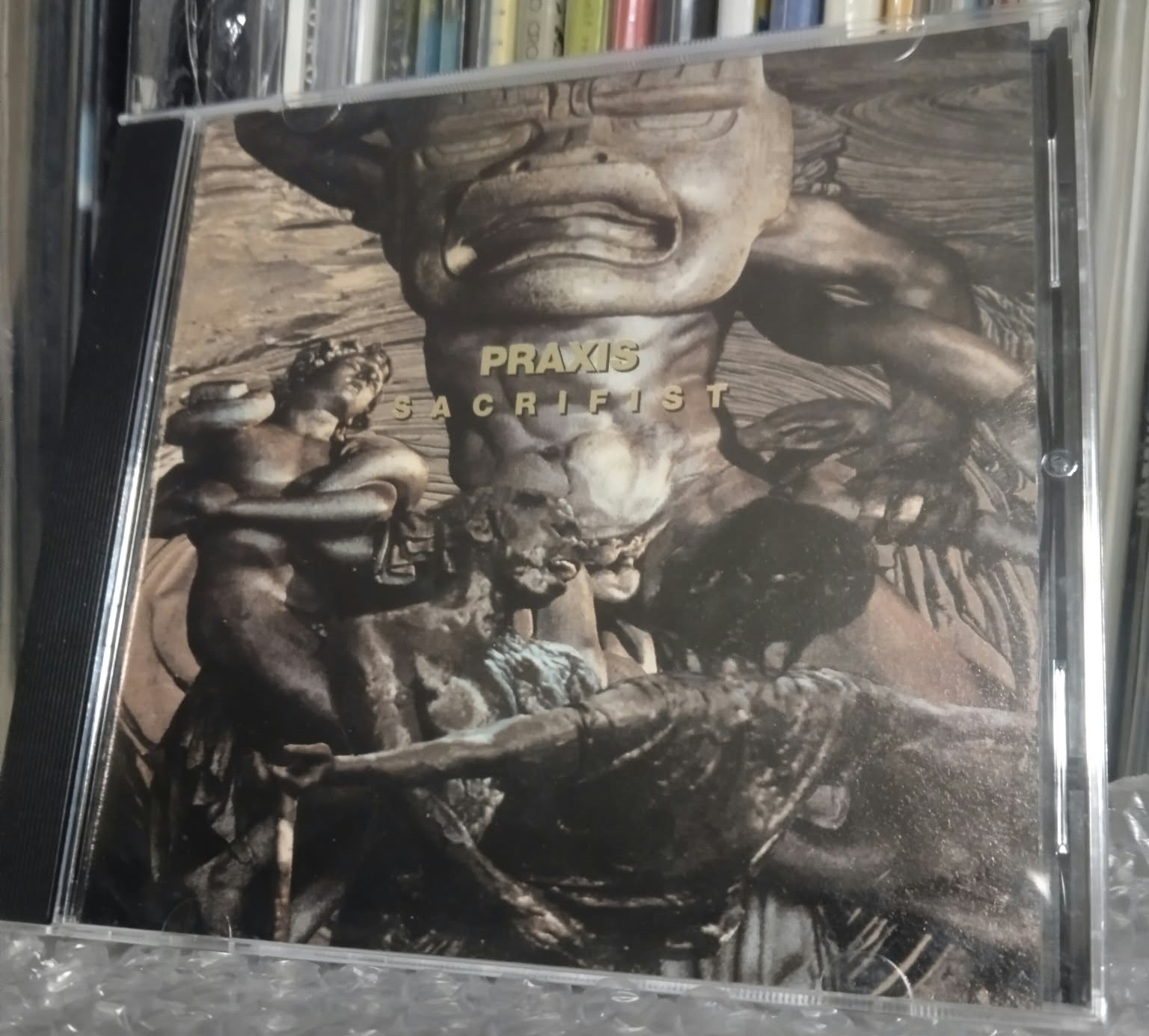
The second album, Sacrifist, came out in 1994 under his new label, Subharmonic. Bill was supposed to create it as an album with NYC experimental artist and hip-hop musician Rammellzee; however, at the suggestion of his friend John Zorn, he instead created the second and more obscure, extreme metal-influenced fusion album. The result was a gnarly, left-turn decision that soldered Bill and company’s vision onto hard-edged musical destruction.

James Koehnline created the equally bizarre, avant-garde cover art, which is now heralded as a classic. He also did the psychedelic art on the previous album, and would go on to create even more of his acclaimed art on more Praxis, Laswell, and related releases.
Now featuring an expanded recording lineup, Sacrifist pretty much bewildered even the Praxis fans who loved the first album. A mind-melting jazz fusion/electronic/psyche/dub monster mutated and cross-bred with extreme metal, thrash, and death metal, it featured players involved in the extreme arts.
While fans of the first album didn’t like it, those who dabbled in the more extreme music genres, and were fans of Blind Idiot God, Painkiller, Naked City, and the other members’ bands loved it. It was, along with the aforementioned other bands, one of the gateway records for metalheads to explore experimental fusion records.

The addition of Blind Idiot God’s Andy Hawkins, Gabe Katz, Ted Epstein (who already collaborated with Zorn and Laswell), experimental extreme jazz fusion saxophonist John Zorn, Napalm Death’s Mick Harris (Bill already having played with Zorn and Harris in Painkiller in 1991), and Yamatsuka Eye from Boredoms expanded the musical palette of the band.
The extended lineup matched the intensity of the core lineup from the last album. The trio of Blind Idiot God made things even noisier and heavier, as Brain devastated on the drums, and Buckethead’s shredding, searing lead solo runs perfectly complemented the brutal crashouts.
Mick Harris, predominantly known for revolutionizing blast beats and coining the term grindcore, performed insane vocal parts (he actually tried out for Napalm Death first as vocalist), with Yamatsuka’s “I am going insane” screams, battling it out on the disc.
Heavier, deranged, and more extreme than its predecessor, it also retained the ambient, dub, psychedelic, noise, and hip-hop elements. The bass frequencies were also deeper and heavier in some tracks.
When it gets heavy, thrashy, and death metally, it totally destroys. When the band decides to groove out on deep dub, or hip-hop beats with layers of effects, or zone out on ambient, those tracks become even more pronounced next to the extreme metal tracks. Finally, at the end of the record, Bernie Worrell (RIP) freaks us out on chilling, extended notes to end the album.

Bill Laswell’s penchant for bringing together such disparate types of music AND musicians in one album, in one recording studio, and on one stage, and making it work is tremendous. Bernie Worrell and Bootsy Collins jamming with Mick Harris while Buckethead shreds on top of the sonic stew madness? Anyone who would have attempted to put them together and make all elements strangely work is an incredible feat.
Sure, this record goes all the way from grooving heavy dub, death thrash detonations, and electronic/hip-hop experimentations to deep ambient, insane shred-a-thons, and keyboard/synth insanity like some mad musical rollercoaster ride, but they all work together, despite its sometimes strange discontinuity. No one has dared attempt these again except Laswell.
Later-era Praxis lineups and studio recordings even included the likes of Iggy Pop, Mike Patton, Invisibl Skratch Piklz, Serj Tankian, Lili Haydn, Maximum Bob, Pat Thrall, Cindy Blackman, and many others. And don’t get us started on his other avant-garde grindcore jazz band with Mick and John, Painkiller, which also featured all-star lineups and guest musicians as well, for even more twisted insanity and mad genius (we’ll do a separate feature on it in the next issue).


Leave a Reply